This property is no longer available, please make another selection.
Details
Sleeps
2
Bedrooms
1
Bathrooms
1
Floor Area
30 m2
Listing ID: EAS192964
Amenities
In Village
Internet
Internet Wifi
Installment Plan
Air Conditioning
Satellite TV
Heat Available
Microwave
Telephone
Property Description
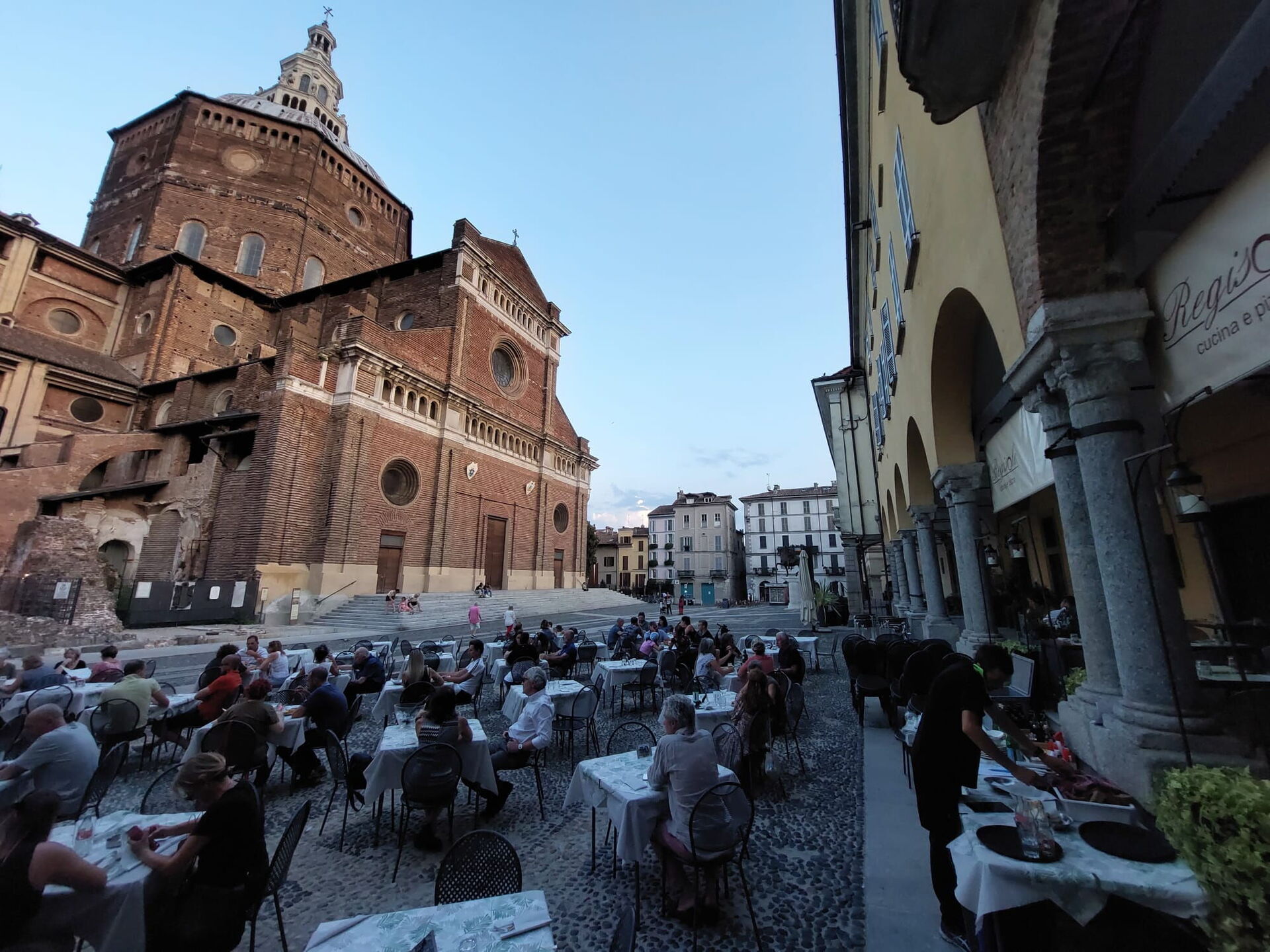
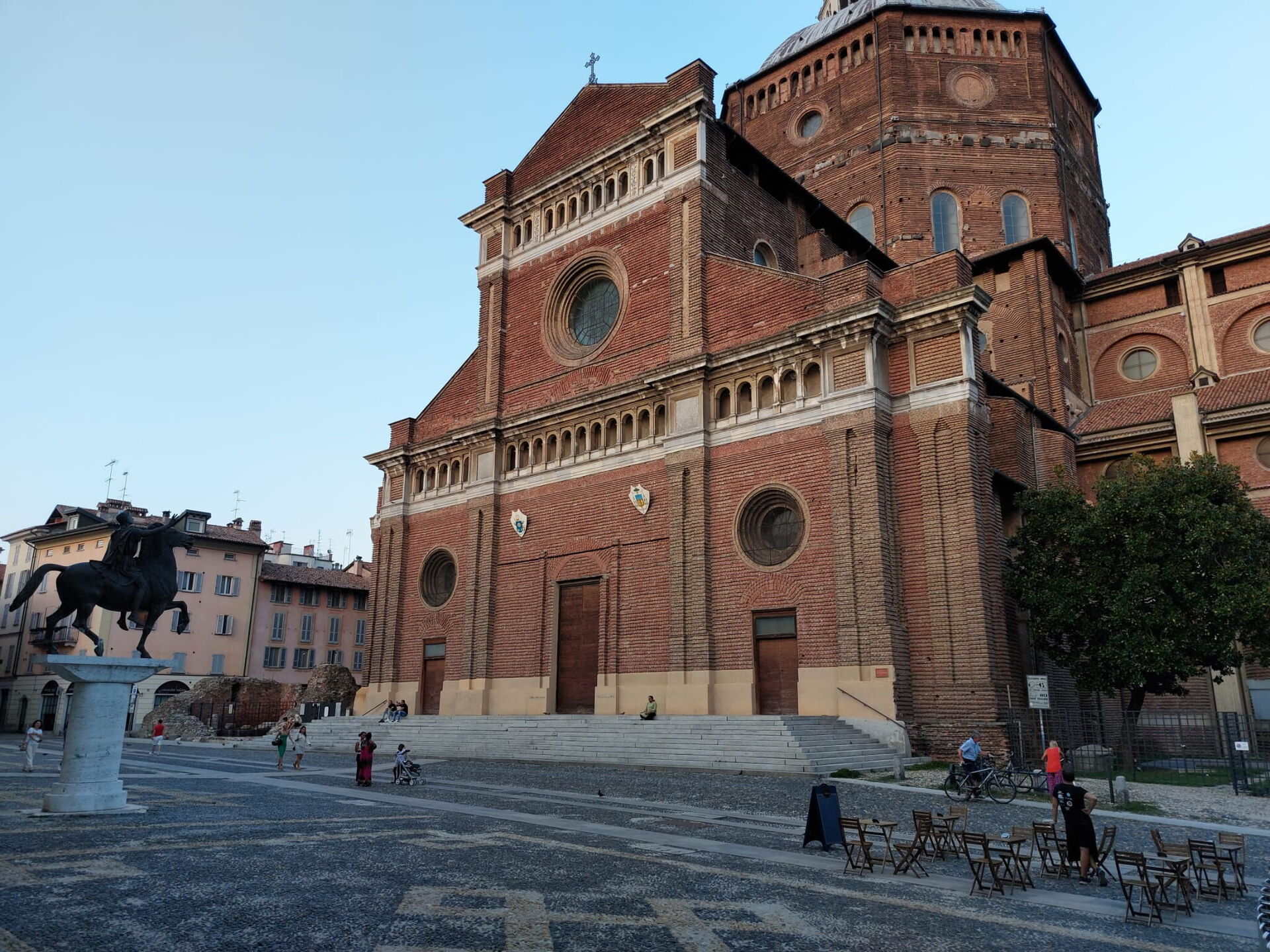
Conveniently located in the centre of Pavia, Italy and only 42 km (26 mi) from Milan. Casa Flora is a nice holiday home (30 sq m) with WiFi internet and air conditioning. The property can accommodate up to two guests comfortably in one bedroom with one bathroom. Near the property there are local shops where you can find fresh produce and other items.
Your Experience
After arriving you will be greeted by the owner or manager where you’ll find a beautiful clean well-maintained property ideal for a relaxing vacation in Lombardy. After a busy day of sightseeing, spend some time with friends and family enjoying a glass of wine - a perfect way to relax at the end the day.
Visit the Area
Most people enjoy visiting close-by cities and towns while on holiday, so for your reference this is a list of popular places with distances (as the crow flies) from the property: Milan 42 km (26 mi), Monza 66 km (41 mi), Como 87 km (54 mi), Bergamo 98 km (61 mi) and Asti 108 km (67 mi). The highway is only 11 km (7 mi) from the villa and there is a train station 840 m (2745 ft) away.
Some other major tourist destinations you should consider visiting are: Florence 291 km (181 mi), Viareggio 251 km (156 mi), Forte Dei Marmi 239 km (148 mi), Rome 570 km (354 mi), Venice 313 km (194 mi) and Milan 42 km (26 mi).
Additional Information
Nearest Airports (distances as the crow flies): Milano (Lin) 52 km (32 mi), Milano Malpensa (Mxp) 86 km (53 mi), Bergamo (Bgy) 99 km (61 mi), Genova (Goa) 129 km (80 mi) and Torino (Trn) 180 km (112 mi).
Special Services Tours - Custom tours can be arranged by the owner for your group. For more details about the tours available, speak to the owner after arriving or inquire prior to booking. The cost will vary depending in the specific tour and number of people.
Interior Description
The main entrance to the unit is on floor 1.
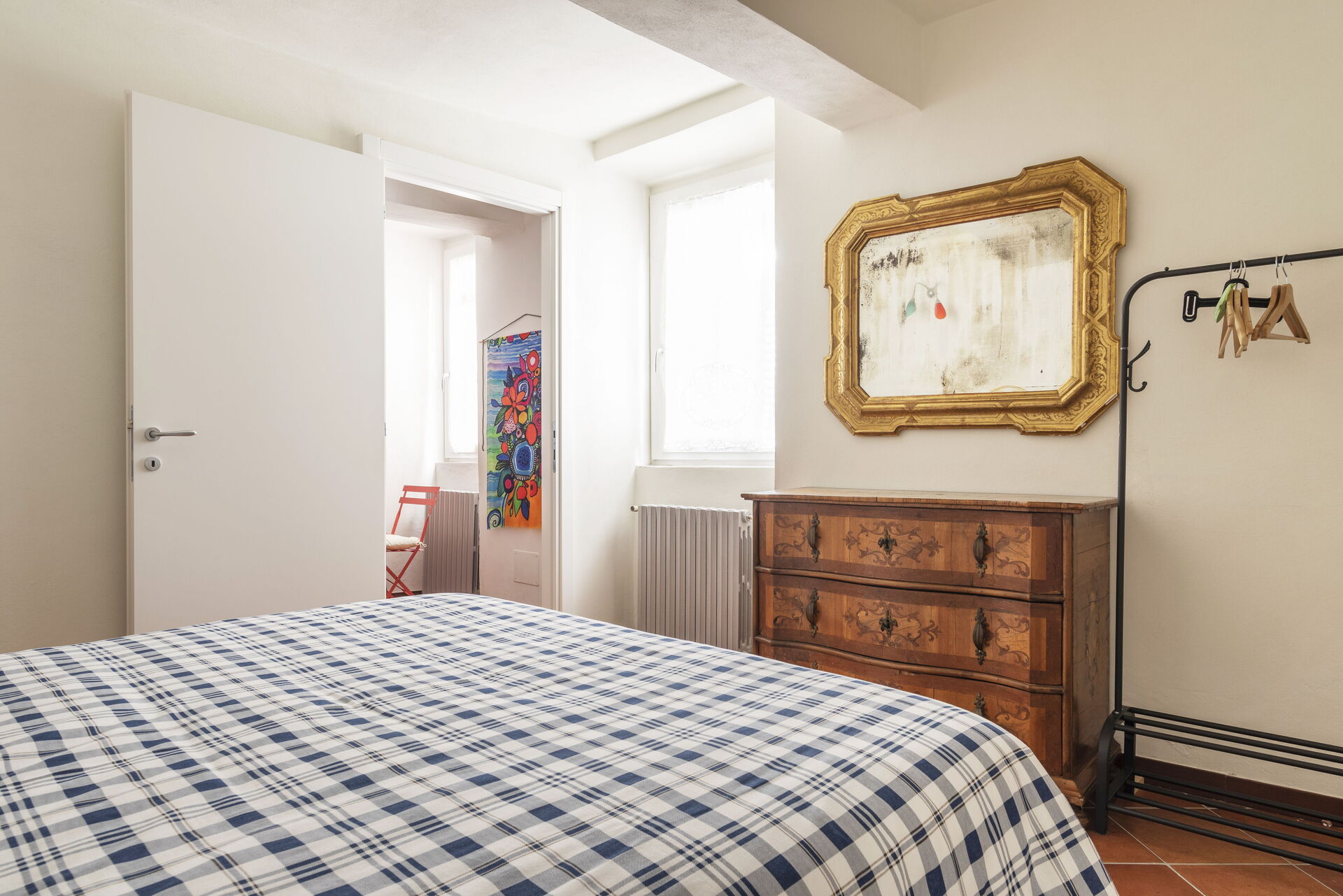
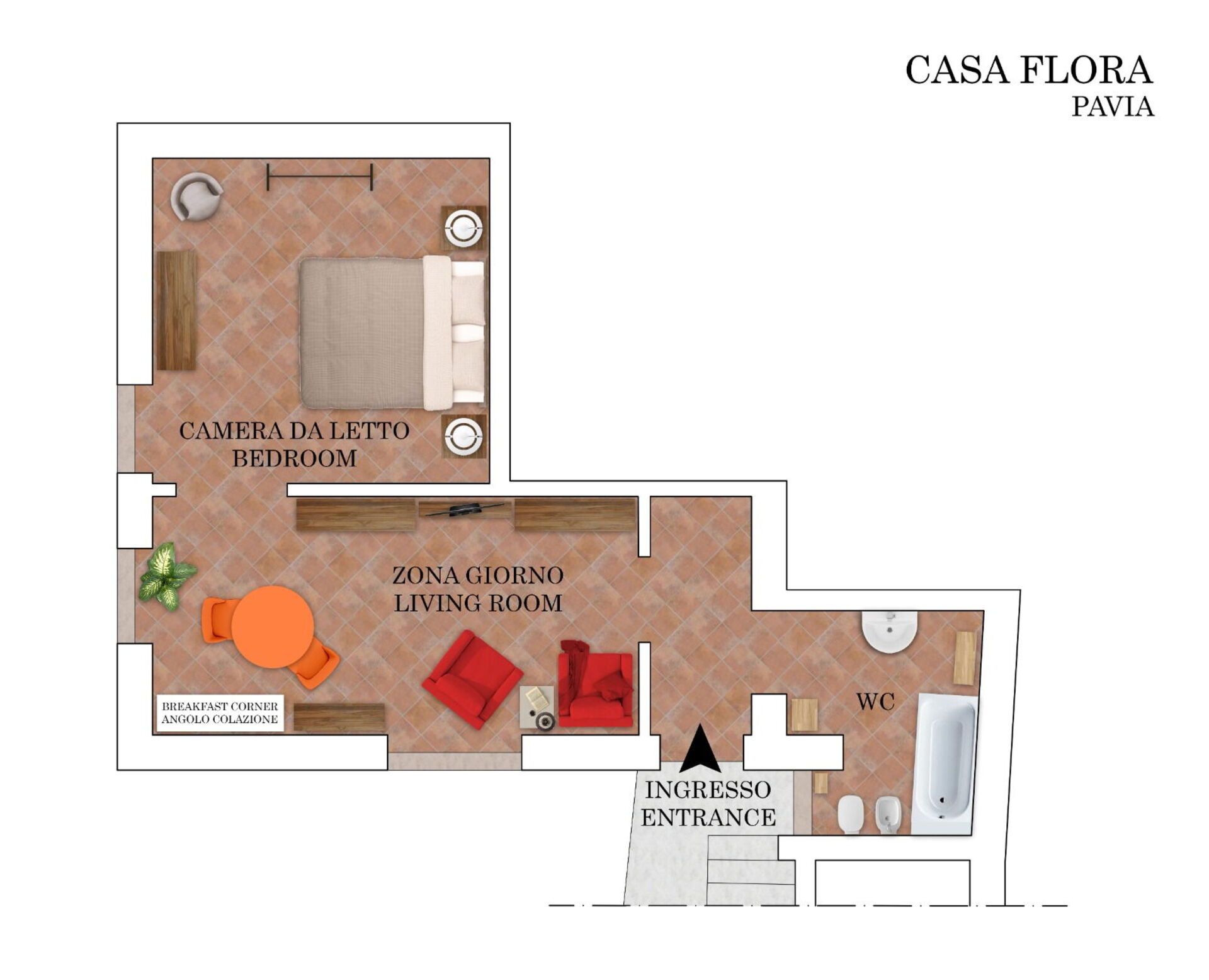
Main Floor Including: living room, bedroom, bathroom.
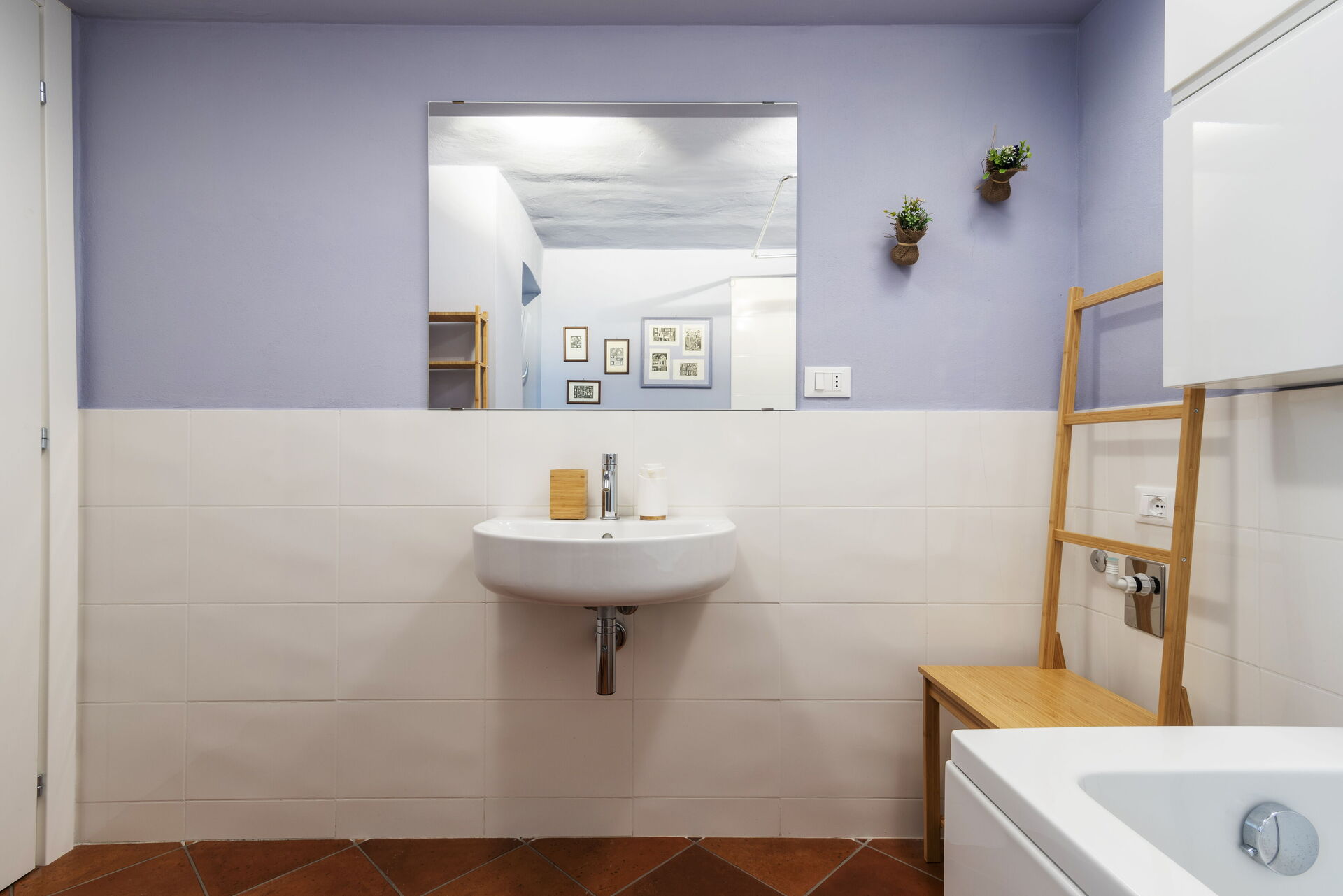
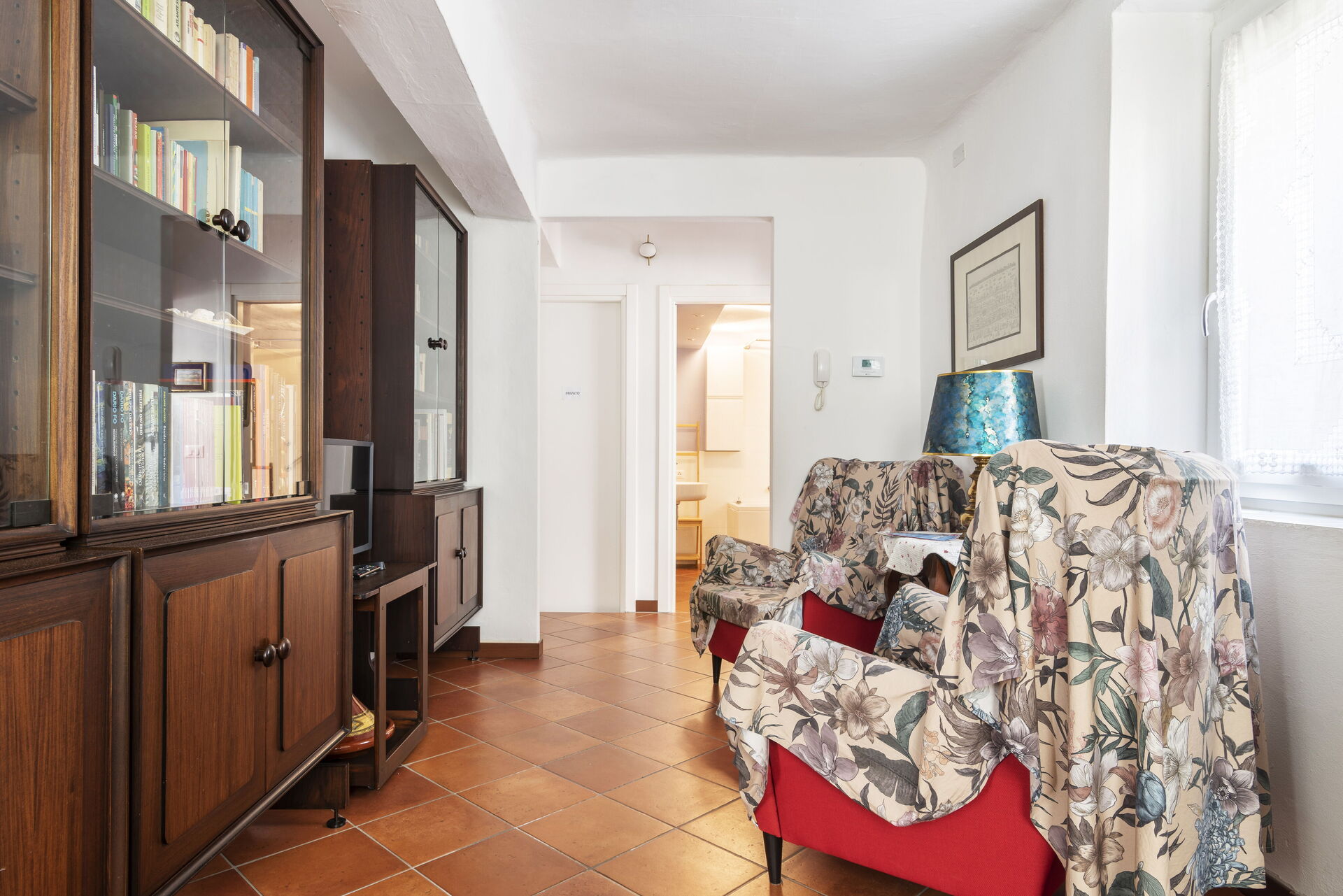
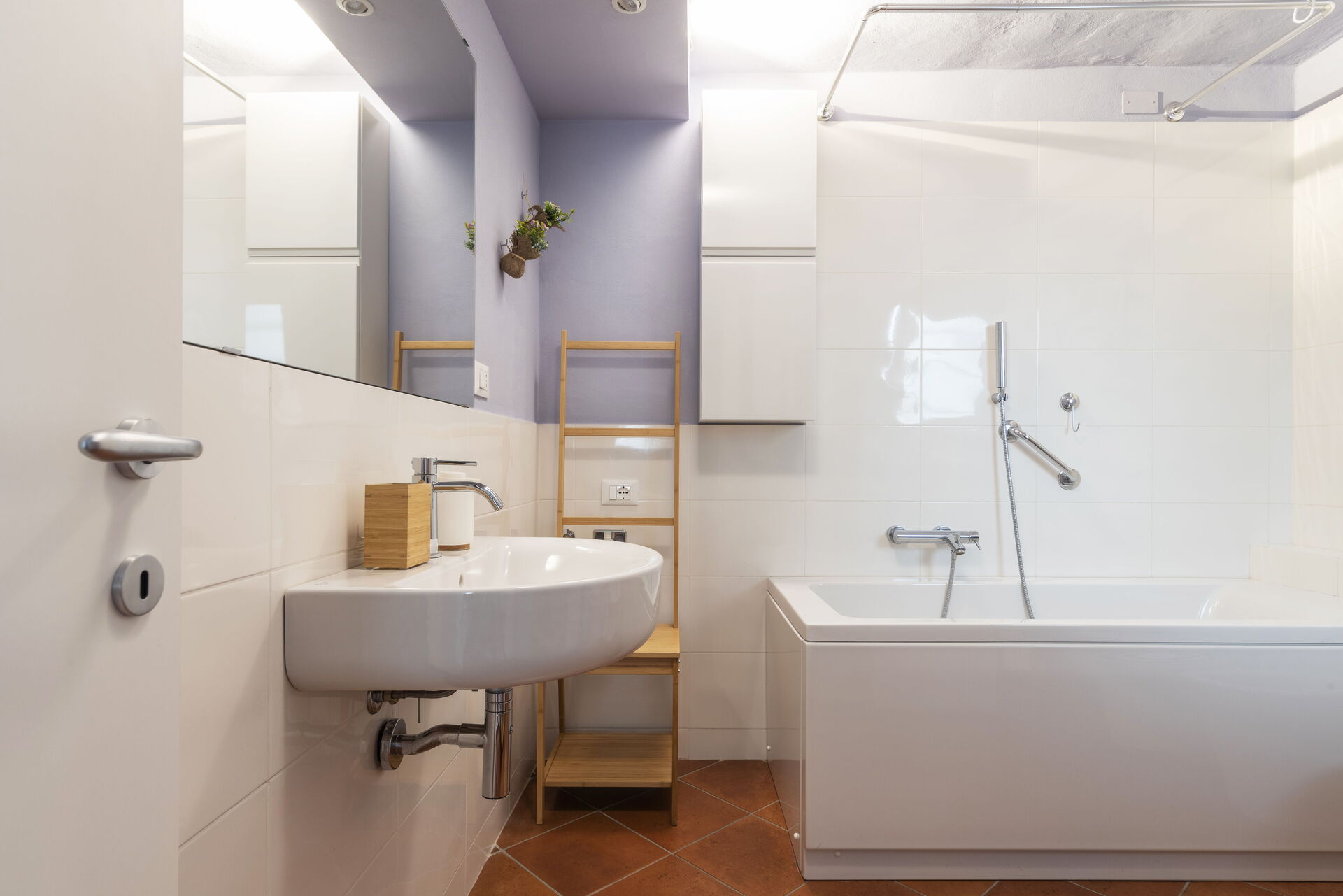
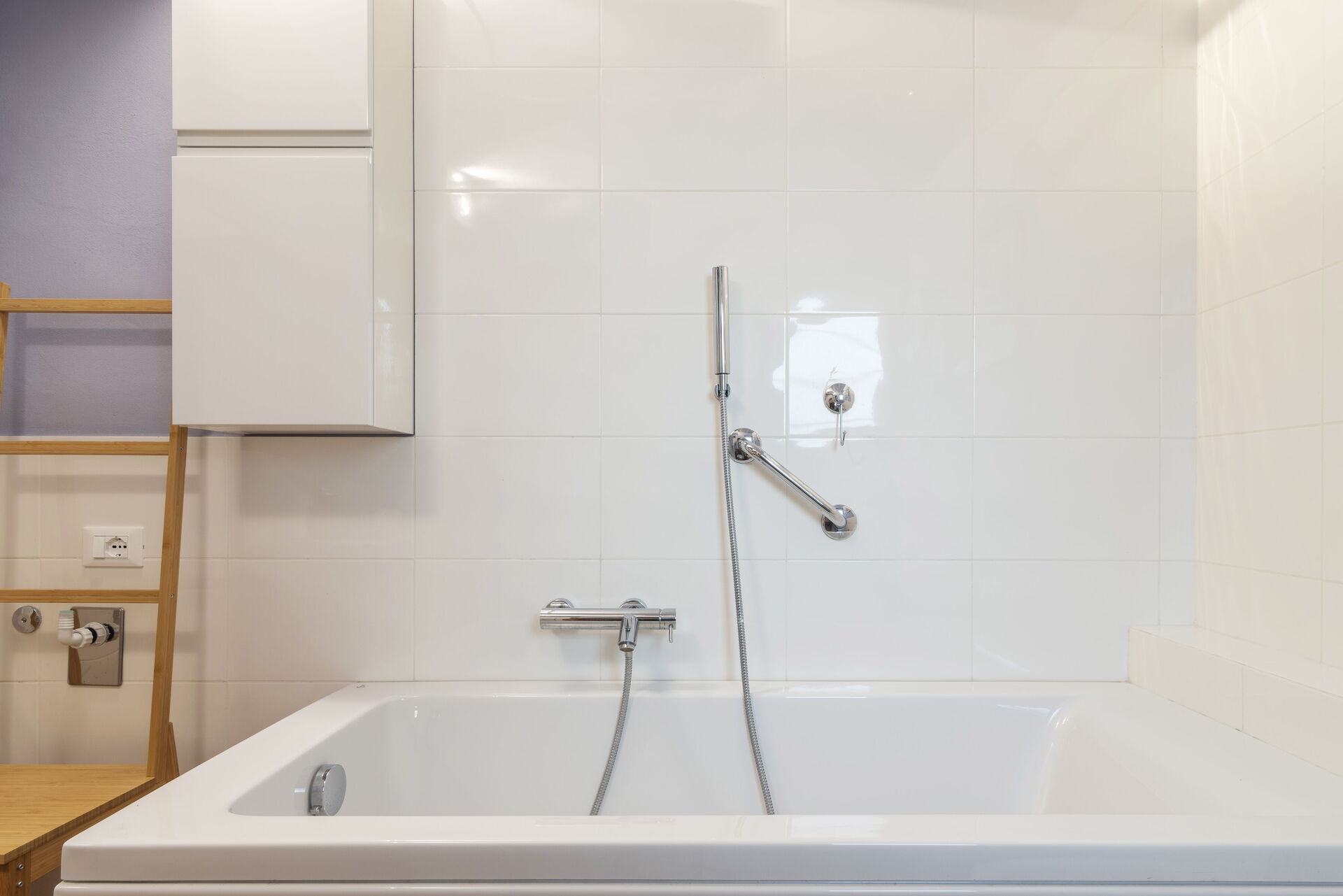
Living room: two armchairs, dining table, WIFI internet, internet, air conditioning, satellite tv. Bedroom: double bed, WIFI internet. Bathroom: basin, toilet, bidet, bathtub, hairdryer.
There is no kitchen, but only a small breakfast corner with microwave and fridge.
Licence or registration number:
018110-LNI-00056
Location Pavia, Lombardy, Italy
Points of Interest
Click on a Point of Interest Type from the list to show them on the map.
Places near the property(Distances as the crow flies)
Airports
Milano (Lin), 52.2 Km
Attractions
Ugo Foscolo and Alessandro Volta passed through the courtyards of his university. On the streets of Oltrepo ', Albert Einstein. Pavia is wisdom, pride and tradition.
In Pavia every place is a story. A Romanesque church houses the remains of St. Augustine. The Basilica saw the coronation of Frederick Barbarossa as King of Italy.
Memory and tradition have not trapped the city. Just stroll through the arcades and the courtyard of the Magnolias of the University founded in 1361 by Emperor Charles IV, one of the oldest in Italy, to breathe history, science and avant-garde together. It happens in the Teresian Hall of the Library, in the classrooms of Foscolo and Alessandro Volta, as well as inside the Historical Museum and the Botanical Garden, with the orchid greenhouse and a large secular plane tree.
In the city, you are happy to discover the Civic Museums inside the Visconti Castle, and the Ponte della Libertà, to be observed at night when the arches are colored in blue, yellow and fuchsia by the neon lights of the artist Marco Lodola. The 14th century Gothic Ark where Saint Augustine rests is kept in San Pietro in Ciel d’Oro. The Barbarossa was instead crowned inside the Basilica of San Michele Maggiore.
Another pearl not to be missed is the Church of San Teodoro built in the second half of the 12th century to house the remains of San Teodoro, the ancient bishop of Pavia and patron saint of fishermen, boatmen and traders who lived in this area of the city.
Inside there is the beautiful fresco by Bernardino Lanzani of 1525 depicting a very detailed view of Pavia still bristling with dozens of high medieval towers, in which the castle, the bridge, the Regisole and many churches that still exist today are easily recognized.
The Basilica of San Michele, a masterpiece of Lombard Romanesque architecture, the basilica has a grandiose three-nave plan, surmounted by the lantern, and is decorated with a rich decorative apparatus of which the sculptures of the facade, the reliefs and the zoomorphic bands are examples. , the frames with spirals and vegetable shoots.
The current building was built on the previous Lombard church and served as the seat of the royal coronation ceremonies: Frederick Barbarossa was crowned here in 1155.
The interior is adorned with sculpted capitals with stories from the Bible and allegorical figures and has a very suggestive crypt.
On the presbytery it houses the floor mosaic depicting the "Months" and the "Labyrinth" and, in the transept, the crucifix called Theodote, a masterpiece in silver foil by a master goldsmith active in northern Italy in the second half of the 10th century.
If you still don't know if it's worth leaving, here are 10 good reasons to visit Pavia and Oltrepò:
1. Einstein lived here
Did you know that even Einstein stayed in Pavia? In 1894 his parents moved to the city to Palazzo Cornazzani - former home of Ugo Foscolo - and the scientist spent a few months there taking walks in the Oltrepò and cycling along the Ticino.
2. It is the city of knowledge
Not everyone knows that Pavia boasts one of the oldest universities in Europe. To learn about its history, visit its museums: the Natural History Museum, the Museum of Electrical Engineering, the Museum of Mineralogy, the Botanical Garden and the Museum for the History of the University. The latter houses the Sala Scarpa dedicated to the famous anatomist doctor, the Sala Porta with finds and experimental preparations made by the surgeon in the nineteenth century, the Sala Golgi, dedicated to the Nobel laureate Camillo Golgi, the Sala Volta, reserved for the inventor of the battery and the 19th century physics cabinet.
3. Its churches are unparalleled
There is the fifteenth-century Cathedral with the relics of the Holy Thorns of Christ, the remains of San Siro, protector of Pavia, and the rich paintings by Carlo Sacchi. But there is also the Church of San Pietro in Ciel d'Oro, known because it houses the remains of Severino Boethius, King Liutprando and Sant'Agostino, doctor of the Church: its ark is one of the most beautiful monuments of the fourteenth century Gothic . Also not to be missed is San Michele Maggiore, dating back to 1118, and the church of Santa Maria in Betlem, in the Ticino village, also known as the “house of Santa Maria della Stella”.
4. His shoes are museum-quality
Just visit Vigevano to discover the International Footwear Museum, which exhibits both ancient models and those that have made the history of more recent fashion. From the Pianella by Beatrice d’Este to the creations of Manolo Blahnik, a space not only for lovers of heel 12, but for all those who want to deepen the evolution of the costume and craftsmanship of Vigevano.
5. It's a land ... sparkling
We explore the Oltrepò Pavese to find the most renowned wineries. Because yes, Pavia too is a land with an ancient wine vocation and here you can taste various nectars: from reds to sparkling rosés, from Bonarda to Barbera to fragrant Riesling, from Moscato to Malvasia, from Cabernet to Pinot Noir, for a total of 36 different titypes, all DOC.
6. It has some of the most beautiful villages in Italy
Not just excellent wines. In the Oltrepò there are some of the most beautiful villages in Italy: Fortunago, Zavattarello and Porana. All three guarantee suggestive atmospheres, monuments rich in history and excellent typical dishes. Varzi is also worth a visit, where a delicious DOP salami is produced.
7. We walk indoors
The covered bridge of Pavia, which spans the Ticino river, is one of the symbols of the city. What we see today is the reconstruction of the ancient fourteenth-century bridge, seriously damaged during the bombing of the Second World War, so much so that the old pillars are still visible in the river. Open to both car traffic and pedestrians, it has a plaque dedicated to the 50th anniversary of the death of Albert Einstein, which bears a sentence written by the scientist in one of his letters: "Die schöne Brücke in Pavia habe ich oft gedacht" (" I have often thought of that beautiful bridge of Pavia ").
8. His theater is a little gem
It is thanks to the commitment of four nobles from Pavia, Count Francesco Gambarana, Marquis Luigi Bellingeri Provera, Marquis Pio Bellisomi and Count Giuseppe Giorgi di Vistarino, if Pavia today can boast a splendid theater. The works began in 1771 and ended in 1773, showing everyone a masterpiece: the Fraschini theater, designed by Antonio Galli Bibiena. With its typical horseshoe shape, it is embellished with a series of boxes and a fully painted wooden ceiling. Artists such as Renzo Ricci, Cesco Baseggio, Vittorio Gassman and Dario Fo, have trod his stage.
9. It is the capital of rice
With about 80 thousand hectares entirely dedicated to rice fields, Pavia is the Italian capital of rice. The plain that extends between Lomellina and Pavese looks like a large mirror that reflects the sky and the landscapes: fascinating, dotted with farmhouses, rich in tradition and history, this land will conquer you not only by taking you by the throat.
10. The Certosa of Pavia
Immersed in the countryside around Pavia, a few kilometers from the city center, you will find one of the greatest Italian Renaissance masterpieces in front of your eyes: the Certosa di Pavia.
The monastery was built by Gian Galeazzo Visconti as a family chapel, connected to the castle through the Visconteo Park. Construction began on 27 August 1396 and it was Gian Galeazzo himself who laid the first stone.
The church was covered at the behest of Francesco Sforza in 1462, while the large cloister, consisting of brick arches supported by marble columns, was finished in 1472. The facade of the Certosa is decorated with a series of medallions depicting characters - historians or legendary - from antiquity.
Higher up are represented scenes from the life of Christ and the Old Testament and figures of Saints and Prophets. Upon entering the church, you will notice the original Gothic structure, inspired by the Milan Cathedral, its three naves are covered with cross vaults decorated with starry skies and figures of Saints and Carthusians. The frescoes dedicated to the Sforza and Visconti families are found in the left transept.
The Certosa di Pavia opened its museum to the public for the first time in 1911. On the ground floor of the Certosa Museum there are about 200 plaster casts of the reliefs of the façade, cloisters and other parts of the monastery. On the first floor there are vestments, sculptures, altarpieces, panel paintings, marble high-reliefs and portraits of the Visconti and Sforza families.
THE CASTLES OF PAVIA
Pavia is a province rich in history and the presence of numerous castles in its territory proves it. The most important and tourist destination is the Viscount of Pavia, protected by a moat. Built by Galeazzo Visconti, it is not only home to museums, but also boasts splendid rooms that still preserve precious frescoes from the Visconti and Sforza periods.
In Pavia, cultural tourism leads outside the city limits to the Sforzesco Castle of Vigevano, located in the upper part of the city. Excellently preserved, it fascinates with the Garden and the Loggia delle Dame and the International Shoe Museum, set up on the first floor.
Among the other castles not to be missed, Belgioioso stands out which, unlike the first two, appears as an imposing aristocratic residence, surrounded by neoclassical gardens. It was restored in the seventies and today hosts cultural events and events. Continuing along the Via Francigena, we meet the majestic castle of Chignolo Po, one of the most sumptuous castle residences in the countryside, so much so that it is known as the "Versailles of Lombardy".
Come and visit the castles of Lombardy and discover the military architecture and fortresses of Pavia: each of them has stories to tell.
THE VIA FRANCIGENA
The Via Francigena, the path that led pilgrims and crusaders from France to the Holy Land via Rome, is a candidate to enter the patriworld of humanity Unesco. An important news for its ability to enhance the historical, cultural and landscape heritage of the territories that this historic route crosses.
The Italian stretch of the Via Francigena is about 945 km long and Pavia is one of the stages that the pilgrim must touch along his path.
There are 4 stages of the Via Francigena in the province of Pavia: from Robbio to Mortara (14 Km), from Mortara to Garlasco (20Km), from Garlasco to Pavia (24 Km) and from Pavia to Santa Cristina (28 Km). Walking through them also means taking a journey through Romanesque and Gothic art, of which there are significant testimonies.
From Robbio to Mortara
Very short stage that crosses the green meadows of Lomellina, cultivated with rice.
Worth noting is the church of San Valeriano in Robbio, a fundamental stop on the Via Francigena of the eleventh century because it offered hospitality to the papal and imperial messengers and the Abbey of Sant'Albino in Mortara which in the Middle Ages became a spiritual stop for pilgrims heading to Rome and still today. the abbey offers hospitality in the structure used as a hospital.
From Mortara to Garlasco
Leaving the Abbey of Sant’Albino, a path begins between fields and woods that crosses Remondò and Tromello, a stop on Sigeric's itinerary. Arrival point in Garlasco at the Church of S. Maria Assunta.
From Garlasco to Pavia
From Garlasco and the Sanctuary of the Madonna della Bozzola and from the nearby Gropello Cairoli, continue to Bereguardo and Zerbolò through a suggestive itinerary in the Ticino Park; just outside the town you will discover the countryside, rice fields, herons, woods and a fascinating road along the embankment.
Just let yourself be guided by the river to conquer Pavia, where it is worth stopping a little longer to visit its churches.
From Pavia to Santa Cristina
The last stage is the most rural; runs along the Pavia countryside that embraces Santa Cristina and Bissone, where pilgrims, contacting the parish, can find hospitality. In addition to the hostel, where Sigeric is likely to have stayed the night, there was an abbey where Corradin of Swabia also stayed. At the Town Hall it is possible to visit the Peasant Museum of the Bassa Pavese.
The itinerary then passes through Linarolo, stops at the 14th century Castle of Belgioioso and at the oratory of San Giacomo della Cerreta, where the church dedicated to the homonymous saint was a meeting point for many pilgrims, stops at the Castle of Spessa Po and at the sixteenth-century one of San Zenone al Po - birthplace of the famous Gianni Brera - to finally follow the Po and Lambro embankments and arrive at Lambrinia, a hamlet of Chignolo Po. Here the Via Francigena resumes its route along the Lodi section of the itinerary by Sigerico.
Local Transport
Pavia Railway Station 1.2 km - about 12 minutes on foot
Bus stop number 1 and number 6 Corso Strada Nuova - 500 meters
Milan Malpensa Airport 85 km
Milan Linate Airport 55 km
Orio Al Serio Airport 100 km
Parking
Casa Flora does not have private private parking. It is possible to use a covered box in the center at a cost of € 15 per day, subject to availability
The Last Supper, one of the most famous of da Vinci’s world-renowned masterpieces and one of the most instantly recognisable paintings in the history of the modern world, is located on a wall in the refectory of the Convent of Santa Maria delle Grazie in Milan. Despite the disastrous experimental method used in creating the work, the passage of time, damage inflicted during World War II, and inadequate restoration efforts in the 19th century, this iconic wall painting remains and is a must-see while you still can.
In the 20th century, an extensive 22-year restoration project to save the painting was undertaken, finally concluding in 1999. While this endeavour helped extend the lifespan of the piece, the damage remains severe. Nevertheless, visitors continue to flock to see this captivating and stunning work, with many returning time and again. If you have booked a holiday rental in Milan or even if you have just one day in Milan during your vacation in Italy, a visit to The Last Supper is an absolute must but here’s what you should know if you're planning a visit...
Whenever I go travelling somewhere, the very first thing that I do is look up the best, most distinct, most interesting, and prettiest places to eat and drink in the area. You’re on holidays, it’s time to treat yourself and have unique and memorable experiences; therefore, the location is very important. In fact, I often plan my entire day around the cafes and restaurants that I have picked out. Cafés, in particular, are key to a relaxing holiday, in my opinion, as they are where you get that first coffee of the day to wake you up or where you can go and sit with your book for a couple of hours and actually take a break. Cafés are the best place to well and truly get away from day-to-day life and relax, which is why we have compiled a list of some of the prettiest cafes around the world that make for perfectly pretty spots to grab a snack or a tasty drink, to get some cute photos to remember your trip by, and to forget about the outside world for a little while. Check out these beautiful oases of calm…
Designed by famous director Wes Anderson, Milan’s Bar Luce is a picture-perfect and chic café that looks like a set from one of his movies. Owned by the Fondazione Prada, this stylish and cinematic gem is a must for those who have found a vacation rental in Milan.
If you book one of our amazing villas in Lombardy and come to enjoy the incredible beauty of this lush and charming region of Italy, there are all sorts of pastoral delights and little towns to explore but it is also well worth heading to the capital of Milan for a day-trip.
A city that is filled with excellent museums, wonderful restaurants, chic bars, architectural gems aplenty, and much more besides, but many will know it primarily as a major fashion capital of the globe and a key destination to seek out and bring some of that distinct Italian style home with them. Certainly, for shopping, it is a hard place to beat!
Leonardo da Vinci famously spent years in Milan working under the Duke of Milan, Ludovico Sforza, painting, designing floats and pageants for special occasions, creating equestrian monuments for the city, and more. His mark, therefore, can be felt in various spots all throughout the city to this day and those who find a villa in Lombardyand visit Milan or those who book a vacation rental in Milan itself who have a penchant for all things Leonardo and the Renaissance, will find plenty to intrigue them from museums to artworks. However, the most unique trace of Leonardo that remains in the city today has to be Leonardo’s Vineyard.
Love Taylor Swift? (Who doesn’t?!) Going to attend one of her European dates? Well, why not make a real trip of it by booking an amazing villa in Europe to enjoy a getaway either side of the intense excitement of the concert!
We have lots of amazing properties to choose from all over Europe but if you’re specifically booking a Taylor Swift trip then here are our properties that align with some of the stops along her Eras Tour dates for 2024…