Those who have found a villa in Split and are coming to enjoy this region of Croatia, are likely coming for sun, fun, relaxation, pretty seaside towns, and the stunning surroundings of the region's lush countryside. However, if you are a thrill-seeker who is enjoying a vacation in Split and you're looking to add a little dose of adrenaline-pumping fun into your schedule between days enjoying the beauty and tranquility of Croatia, if you really want to admire those famously gorgeous views in Split, then a day enjoying the services of Zipline Croatia Omis is just the thing!

26
Nov
2020
2020
You're exploring the pretty and historic core of Zagreb when you stumble upon a lovely square filled with flower boxes, dollhouse-like buildings and the stunning cathedral of Zagreb with its ornate spires rising high into the sky as a backdrop, and a sea of red umbrellas, underneath which a cornucopia of fresh produce, baked goods, and other market goodies are on sale: you've managed to find yourself at the city's famous Dolac Market. Merely yet another of the many wonderful delights to discover in the city, this charming historic market is another reason to browse our vacation rentals in Zagreb and plan a trip to this gem of a holiday destination.
Located centrally in the Gornji Grad - Medveščak city district of Zagreb, right behind the main square of Ban Jelačić Square, Dolac Market is both the most-visited and the best-known of farmer's markets in the city. Combining a traditional open market with stalls and a sheltered market below, the open market is on a raised square that can be reached via a staircase from Ban Jelačić Square and the covered market is downstairs.
Located centrally in the Gornji Grad - Medveščak city district of Zagreb, right behind the main square of Ban Jelačić Square, Dolac Market is both the most-visited and the best-known of farmer's markets in the city. Combining a traditional open market with stalls and a sheltered market below, the open market is on a raised square that can be reached via a staircase from Ban Jelačić Square and the covered market is downstairs.
Posted in: Architectural Gems
Curiosities
Museums & Galleries
Must See Attractions
Tourist Attractions
Close to the Italian border, to the north of Croatia, you will find the lovely town of Pula, capital of Istria. An impossibly pretty place, you can expect cobbled streets, Roman ruins dotted throughout (including a rather impressive and picturesque amphitheatre that could give the colosseum a run for its money), wonderful beaches, excellent seafood, festivals, a vibrant nightlife, and lots to see and do in this seaside gem. It is a place with something to suit everyone from couples in search of romance, groups of friends in search of fun, families looking for lots of great activities, and solo travellers looking for a bit of adventure alike.
If you have found a vacation rental in Pula or a vacation rental in Istria and are looking at the top things to see and do while exploring this charming city, you will most likely see plenty of travellers and guides suggesting a visit to Pula's Aquarium. The most visited public aquarium in Croatia, this institution is particularly devoted to education on the sea and its inhabitants, the need for protection and conservation of our waters, and the rescuing and returning back to the sea of critters who have found themselves in a spot of danger or trouble. As such, it is a perfect place to see sea creatures if you also really care about their safety and well-being!
If you have found a vacation rental in Pula or a vacation rental in Istria and are looking at the top things to see and do while exploring this charming city, you will most likely see plenty of travellers and guides suggesting a visit to Pula's Aquarium. The most visited public aquarium in Croatia, this institution is particularly devoted to education on the sea and its inhabitants, the need for protection and conservation of our waters, and the rescuing and returning back to the sea of critters who have found themselves in a spot of danger or trouble. As such, it is a perfect place to see sea creatures if you also really care about their safety and well-being!
24
Sep
2020
2020
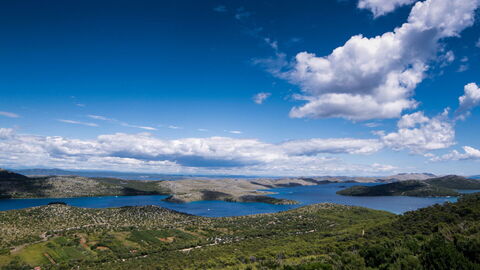
Telašćica is a bay and natural park on the southeastern part of the island of Dugi Otok that is located just off the beautiful Dalmatian Coast, west of Zadar. Located on the biggest of the Zadarian Islands, it is a truly extraordinary natural gem and an excellent day-trip location for those who have found a vacation rental in Dalmatia. Under consideration as a UNESCO World Heritage Site in Croatia, this incredible place is a true paradise on earth and a perfect place to escape to while on holidays in Croatia.
At 10km long and 160-1800m wide, this deep inlet is dotted with cliffs, 6 islets inside the bay itself, and smaller bays, and is covered in vineyards, olive groves, fig trees, and Aleppo pine and holm oak forests. Telašćica Bay is also home to Lake Mir, a saltwater lake that is located picturesquely on a narrow strip of land between the bay and the open sea. The rich turquoise lake, wild and steep craggy cliffs, the barren karst area of the bay, islets and rocks emerging from the rich navy sea, the lush greenery of the forests: all of it paints an exceptionally scenic picture and it is the kind of restoratively beautiful landscape that one really needs to see with their own eyes.
At 10km long and 160-1800m wide, this deep inlet is dotted with cliffs, 6 islets inside the bay itself, and smaller bays, and is covered in vineyards, olive groves, fig trees, and Aleppo pine and holm oak forests. Telašćica Bay is also home to Lake Mir, a saltwater lake that is located picturesquely on a narrow strip of land between the bay and the open sea. The rich turquoise lake, wild and steep craggy cliffs, the barren karst area of the bay, islets and rocks emerging from the rich navy sea, the lush greenery of the forests: all of it paints an exceptionally scenic picture and it is the kind of restoratively beautiful landscape that one really needs to see with their own eyes.
17
Aug
2020
2020
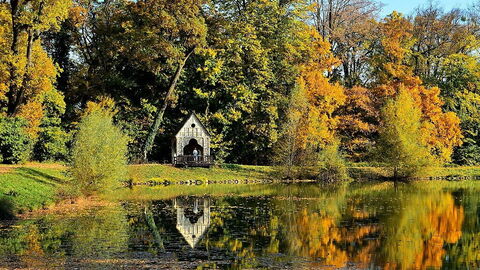
Maksimir Park is the oldest public park in Zagreb and is one of the most beautiful spots in the city. In autumn, the trees lining the main paths and in the forests of the park turn the most stunning golden hues, making it the most perfectly picturesque place to walk around and enjoy nature. On the hottest days of summer, those same trees afford blissful shade and respite from the scorching sun. During winter, snow rests on branches and makes the paths glitter and, in spring, the blooms and animals take over. So, no matter when you find a vacation rental in Zagreb and no matter what time of year you come and visit the city, a walk in the park is a good idea!
Maksimir Park was founded in 1787 and was the first large public park in South-Eastern Europe, as well as an early example of a public park in Europe, in general. Named for Bishop Maksimilijan Vrhovac of Zagreb, the park was opened in 1794 and was originally on the outskirts of the city and home to a dense forest of hornbeams and oaks. Due to expansion, however, it is located in a more central position today and is now surrounded by several neighbourhoods, with only some of the original forest still remaining and acting as a girdle to the park. Landscaping was initially undertaken according to the plans of Bishop Vrhovac in the baroque style but then redesigned by Bishop Juraj Haulik, among others, in a more romantic neoclassical style that was in line with Biedermeierist notions, incorporated elements of historicism, and emulated the park that was established at the Laxenburg estate of the Habsburgs.
Maksimir Park was founded in 1787 and was the first large public park in South-Eastern Europe, as well as an early example of a public park in Europe, in general. Named for Bishop Maksimilijan Vrhovac of Zagreb, the park was opened in 1794 and was originally on the outskirts of the city and home to a dense forest of hornbeams and oaks. Due to expansion, however, it is located in a more central position today and is now surrounded by several neighbourhoods, with only some of the original forest still remaining and acting as a girdle to the park. Landscaping was initially undertaken according to the plans of Bishop Vrhovac in the baroque style but then redesigned by Bishop Juraj Haulik, among others, in a more romantic neoclassical style that was in line with Biedermeierist notions, incorporated elements of historicism, and emulated the park that was established at the Laxenburg estate of the Habsburgs.