A White-handed gibbon
Posted in: Day Trips Must See Attractions Tourist Attractions Water & Amusement Parks
Two of the best holidays of my childhood, which we all still remember fondly as a family, took place in Gran Canaria in the Canary Islands. In fact, the second time that we visited we actually returned to the exact same part of the island, Maspalomas, and the very same villa complex, we liked it so much. One of the main tourist centres on Gran Canaria, the resort town of Maspalomas went from a small hamlet to a vision of what tourism could be when it was redeveloped in the 1960s. It is touristy, to be sure, but it is also charming with lots of eccentricities, unique-looking buildings, stunning beaches, lots of places to eat and go for drinks, and plenty to see and do. For a family holiday, a vacation rental in Maspalomas is a great idea as there will be something to keep everyone in the group happy and interested. One such perfect family-friendly attraction in Gran Canaria is Palmitos Park.

At the time that we visited Maspalomas, my younger brother’s dinosaur obsession was in full swing. As birds are a direct descendant of dinosaurs and have been described as living dinosaurs, his interest carried over to them too and Palmitos Park was chosen for one of our family outings to cater to his particular interests. However, it wasn’t just him that enjoyed it, the entire family had an incredible time and we still talk about it today.

Tarragona Amphitheatre, Spain
Posted in: Architectural Gems Curiosities History Must See Attractions Tourist Attractions
This week, we were talking about the beautiful Catalonian city of Tarragona and one of her Medieval architectural gems. However, the city has much older roots than that and, therefore, there are some more ancient architectural gems that are also worth mentioning. One of these is the Amphitheatre. Located right by the coast and often home to recreation events of the gladiatorial games that once took place in the venue during Roman times, it is a fascinating monument to the city’s ancient past and a must-see for anyone who has found a vacation rental in Catalonia and is spending time exploring Tarragona.
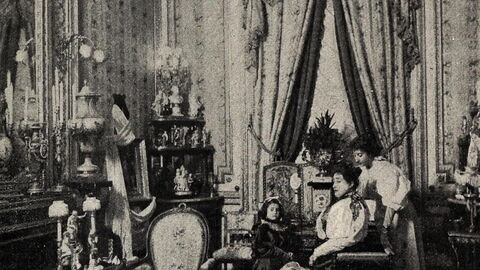
Casa Castellarnau de Tarragona, interior
Posted in: Castles & Palaces Curiosities Museums & Galleries Must See Attractions Tourist Attractions
Casa Castellarnau de Tarragona is one of the few noble homes in the city of Tarragona that has been fully preserved to this day. It is a grand Catalan stately home that dates back to the early 15th century and is a fascinating beauty, filled with incredible antique furniture, objects, and works of art. Once the home of the powerful Castellarnau family, it is now the Museu d'Història de Tarragona, or History Museum of Tarragona. Showcasing 1700s and 1800s furniture & decorative objects in the setting of a stunning restored aristocratic residence, this inexpensive museum is a great place to go and step back through time for an afternoon while exploring the city.

Carrer Cavallers was the street on which all of the city’s noble families lived during the Middle Ages and this home, number 14, was built in the 15th century for one of these families. It has, however, undergone many different periods of restoration and refurbishment throughout the centuries, largely reflecting 18th and 19th century alterations today. In the 18th century the building was purchased by Carles de Castellarnau and under his direction there were significant changes made to both the façade and to the interior and layout of the building.
Palacio de Linares
Posted in: Architectural Gems History Legends Museums & Galleries Tourist Attractions
This week, we’re talking all things spooky and creepy as we plan mid-term break and Hallowe’en getaways. We’ve already looked at an abandoned and haunted cemetery in Zagreb, Croatia, and the vampires of Santorini in Greece but if you were thinking of heading to Spain, fear not, for she, too, has her fair share of tales of the supernatural and ghosts and ghouls. If you find a vacation rental in Madrid, for example, you can head to the 19th century Palace of Linares (or Palacio de Linares), now known as the Casa de América, which is said to be very haunted due to the terrible things that supposedly once happened within its walls.

The palace was previously the family home of the Linares noble family and is now dedicated to pan-Hispanic films, lectures, and exhibits as the Casa de América. When work began in 1990 to convert the building into this multi-purpose cultural space, rumours of ghosts quickly began to spread, with reports of the sounds of footsteps, doors opening and closing, and crying and screams, in the supposedly empty palace. Most of these incidents were reported to take place near the strange life-size doll house located in the courtyard, which belonged to Raimunda, a little girl who was adopted by Marqués and Marquesa de Linares. The official reports and documents report that it was a happy home but the local legends (which researchers do hold to be untrue) that have cropped up tell a different story.
Cheeses
Posted in: Curiosities Food Food and Wine Museums & Galleries Must See Attractions Products & Specialities Tourist Attractions
Spain loves a food product museum and there are various kinds that you will encounter located all around the country. However, one of the best of all of these museums is so appealing because the central star is well and truly the focus. We are, of course, talking about the MQM Museo del Queso Manchego in Toledo, which is less about the museum and far more about cheese. If you have found a vacation rental in Castille-la-Mancha and are spending time exploring Toledo and, in particular, exploring the culinary scene of the city, then you should definitely set aside some time to stop by.

Located in the heart of the historic quarter of Toledo, right next to the Cathedral, the Museo del Queso Manchego (or Museum of Manchego Cheese) was opened in the last few years and is dedicated to this traditional and ancient local cheese that is the city’s most well-known export. It is divided into three areas; a museum, a catas (or tasting) room, and a shop. The museum has an exhibition with audiovisual presentations, objects involved in cheesemaking throughout the centuries, and other Manchego cheese-related items, accompanied by information panels. This information is in Spanish so, if you don’t speak the language, you might not be able to glean as much from the exhibition. However, the items are still interesting to look at as part of the whole experience.