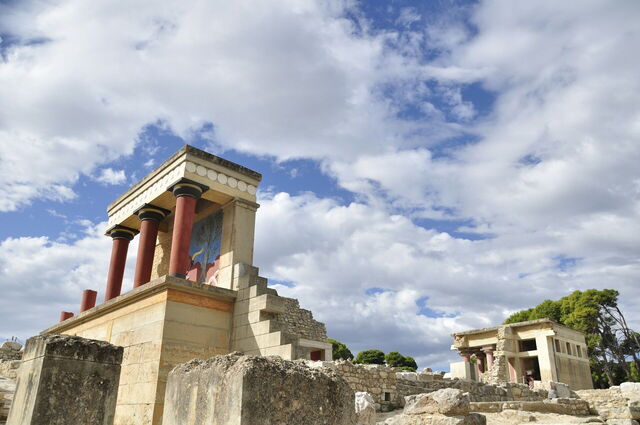
If you have found a vacation rental in Crete, one of the most important and famous historical attractions that you must find time for while exploring this beautiful island is the Palace of Knossos, built on Kephala Hill. Once the grand capital of Minoan Crete, the site is an evocative and extraordinary space that recreates an incredible empire long gone. The earliest traces of human inhabitation of this site date back to the Neolithic period, around 7000 to 3000BC and there were then several palaces built on the site from 1900BC onwards. The last of which fell into ruin in 1350BC. The site was finally occupied once more from the Late Mycenaean period until Roman times. It has been connected to famous Greek legends, such as the myth of the Labyrinth and the story of Daidalos and Ikaros and is, today, one of the most famous tourist attractions in all of Greece.
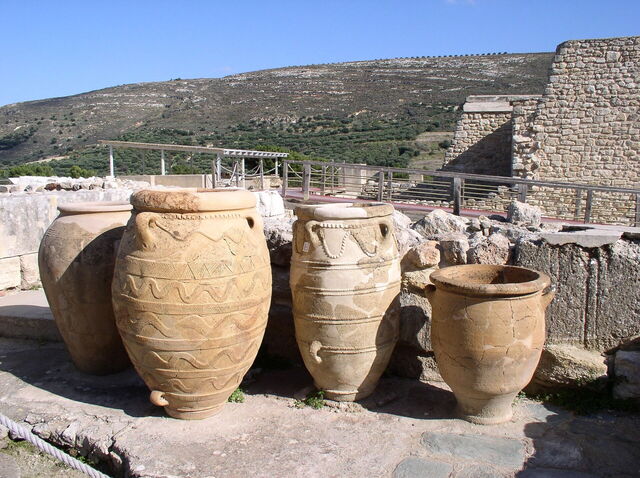
Located 5km from Herkalion, the ruins of the Palace of Knossos were first excavated in 1878 under Cretan archaeologist Minos Kalokairinos, and the continued from 1900 to 1930 under British archaeologist Sir Arthur Evans, a figure who controversially restored parts of the site. His work brings many elements back to life, though best practice states that his rather invasive interventions were wrong.
In spite of this, the site is still an extraordinary place to visit and, in fact, due to it, better evokes how things might have looked in the past for visitors. There is no particular route that tourists have to follow but some of the highlights that you should ensure to take in include the West Court, which was probably a marketplace or a site for public gatherings; the Fresco Gallery with its replicas of famous frescoes including the Bull-Leaper, Ladies in Blue, and the Blue Bird; the stunning Throne Room with its alabaster seat and frescoed walls; the Royal Apartments; the sophisticated water and drainage system; the stone mason's workshop; and the theatre.
In spite of this, the site is still an extraordinary place to visit and, in fact, due to it, better evokes how things might have looked in the past for visitors. There is no particular route that tourists have to follow but some of the highlights that you should ensure to take in include the West Court, which was probably a marketplace or a site for public gatherings; the Fresco Gallery with its replicas of famous frescoes including the Bull-Leaper, Ladies in Blue, and the Blue Bird; the stunning Throne Room with its alabaster seat and frescoed walls; the Royal Apartments; the sophisticated water and drainage system; the stone mason's workshop; and the theatre.
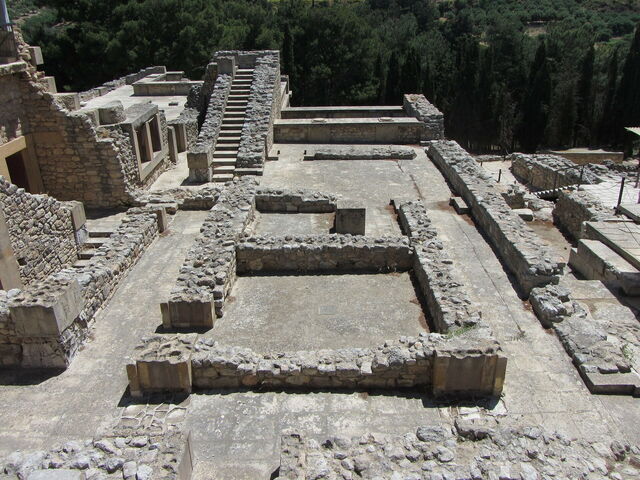
Imposing, grand, beautiful, and iconic, these ruins and this site is one of the most extraordinary things one could ever hope to behold and a must-see for those visiting Crete. To get there, you can simply drive or take a bus on the Bus 2 line from the local bus station in Heraklion, which costs just €1.70.