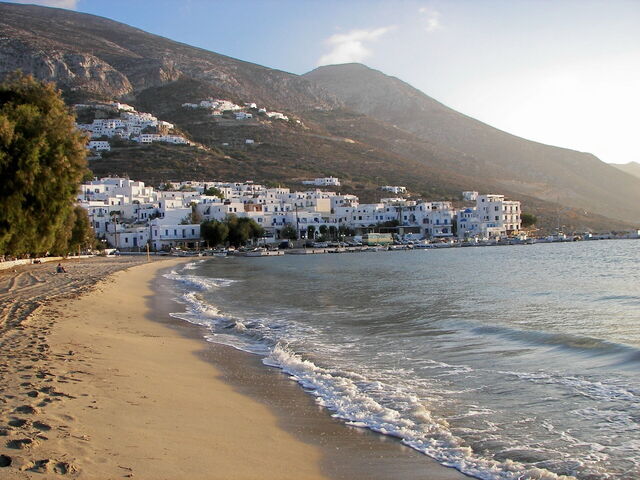
Greece's perfect islands, with their soft sandy beaches, deep topaz waters, pretty white-washed villages, blue domes, and quiet pace of life, have been tourist favourites for a long time. These are the destinations reserved for honeymoons and anniversaries and long-awaited holidays. These are the idyllic spots that people dream of for years.
Crete, Santorini, Kos, Mykonos, Rhodes; there are many famous examples of Greek islands to choose from. However, if you have found a vacation rental in the South Aegean and you're narrowing down the list of islands you want to visit, Amorgos, though less well-known than other isles in the area, is definitely one that must be included.
Crete, Santorini, Kos, Mykonos, Rhodes; there are many famous examples of Greek islands to choose from. However, if you have found a vacation rental in the South Aegean and you're narrowing down the list of islands you want to visit, Amorgos, though less well-known than other isles in the area, is definitely one that must be included.
Amorgos, the easternmost island of the Cyclades island group, is just over 126 square kilometres in size and has a population of less than 2,000. It is a little bit of a well-kept secret and is full of delights and surprises at every turn. Like many of its neighbouring islands, it boasts a beautiful landscape, perfect beaches, and pretty towns but particularly lovely examples and especially wonderful views, sweeping over the Archipelago due to its height above sea level. It is here that the they chose to shoot the 1988 movie “Le Grand Bleu” with Jean Reno and it is easy to see why. It is, in a word, stunning.
One of the most iconic sights on the island and one of its absolute must-see attractions is the Hozoviotissa Monastery, a beautiful, blindingly white architectural complex perched dramatically and picturesquely on a cliffside on the eastern side of the island that is said to have been founded by the Byzantine Emperor Alexios I Komnenos in 1088. Among the extraordinary monastic settlements dotted around Greece, it is one of the most impressive and striking. The climb to the entrance and then to the top of its eight different levels is somewhat arduous but pays off in dividends when you reach the pinnacle and take in the sweeping views over the wild beauty of the surrounding area. For the best sightseeing options along the way, the Itonia walk, which lasts 3 hours and is 10km long takes in the ancient Acropolis while the one-hour Valsamitis route goes past the Church of Agios Georgios Valsamitis and ends at ancient Minoa and its ancient stadium, gymnasium and Temple of Dionysus.
For more water-based activities, you'll find an equal amount of variety with a whole host of gorgeous beaches and activities to choose from. The beach of Ayia Anna, where the “Le Grand Bleu” was shot, has a pebbly shore dotted by rocks and caves that make it an ideal spot for snorkelling, Mouros Beach boasts an incredible rocky landscape and secluded caves, the long sandy beach of Eyiali is dotted with bars and tavernas, the beach of Levrossos is secluded and peaceful, the stunning beach of Gramvoussa has an impossibly picturesque white sandy beach and turquoise waters, and Liveros Bay is home to the impressive wreck of the Olympia, to name some of the options available.
Scuba diving has also recently become popular on the island, making the most of the lovely seabeds of Amorgos, which is populated by ancient shipwrecks, underwater caves, bright sponges, colourful fishes, and natural reefs. There are a couple of diving centres to choose from, offering instruction for those from absolute beginners to people looking to hone skills to those in need of little to no help but requiring equipment.
Once you have worked up an appetite, be sure to stop into a taverna and try some of the local specialities like Xerotigan, which are fried pies filled with white beet and fennel; Ladotyri, a sheep’s milk cheese stored in olive oil; Kakavia, a fish soup; Psimeni raki, the local spirit; and pasteli, which are sesame cookies. The seafood, of course, can not be missed and is some of the freshest and most delicious that you could ever imagine eating. Plus, paired with the setting and those views, everything tastes just that little bit better than it already is.
Of course, other than roaming the countryside, there are towns and villages to be discovered on Amorgos. The mountain village of Tholaria is built near Vigla, the acropolis among the remains of an ancient called Aegiali, and is a pretty place that boasts a traditional way of life and friendly, hospitable locals who still work in ancient trades and serve up delicious food and local products in the town's tavernas and kafenion. It is set amongst rolling hillsides and surrounded by mountain paths lined with flowers and herbs, looks out over a glistening bay, and is made up of a small cluster of pretty white-washed buildings cut through by little winding alleys and roads. There are little typical tourist attractions but everywhere you turn is lovely and there are two great main beaches called Megali Glyfada and the Mikri Glyfada, which are great swimming spots.
Chora, meanwhile, is the medieval capital of Amorgos, also set amongst mountains. Crowned by its 13th century Venetian castle, it is surrounded by wild and scrubby landscapes dotted by windmills and is filled with little white houses, a labyrinth of winding paved alleys, Byzantine and early Christian churches, little cafes, bars and restaurants, scenic squares, bougainvillea trees, and, even, the odd impromptu feasts that you may just be welcomed to join in on if you're lucky! It is a truly magical place where it feels like anything can happen and, surely, one of the prettiest villages in all of Greece.
Off the beaten tourist track, impossibly lovely and always full of surprises, this incredible island is a must for those looking for a taste of something authentic and special in the South Aegean on a holiday in Greece.