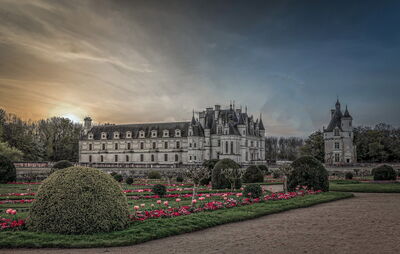
The Loire Valley of France is famously home to some of the most beautiful castles in the world. These châteaux are the closest thing that one can probably expect to find to Disney castles and fairytale backdrops and a must-see for those who have browsed our vacation rentals in Pays De La Loire and are exploring this part ofFrance. The region is home to plenty of truly magical castles but one of the best-known and most beloved examples has to be the Renaissance masterpiece that is the Château de Chenonceau.
Often described as the epitome of “feminine” gracefulness in architecture, the Château de Chenonceau, combines late Gothic and Renaissance styles of architecture in its smooth white walls, high sloped roof, pretty curved turrets and towers, plush and opulent interiors, and the elegant flower gardens that surround. This charmingly lovely and aesthetically pleasing nature led to the castle winning the hearts of endless esteemed ladies throughout history and it was, accordingly, nicknamed the, “Ladies’ Château.” Furthermore, the fingerprint of many important female figures on the building is apparent in its design, additions, and alterations.
Often described as the epitome of “feminine” gracefulness in architecture, the Château de Chenonceau, combines late Gothic and Renaissance styles of architecture in its smooth white walls, high sloped roof, pretty curved turrets and towers, plush and opulent interiors, and the elegant flower gardens that surround. This charmingly lovely and aesthetically pleasing nature led to the castle winning the hearts of endless esteemed ladies throughout history and it was, accordingly, nicknamed the, “Ladies’ Château.” Furthermore, the fingerprint of many important female figures on the building is apparent in its design, additions, and alterations.
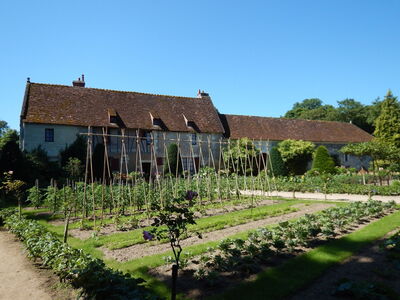
Located along the River Cher, near the small village of Chenonceaux in the Indre-et-Loire département of the Loire Valley in France, the first mention of an estate at Chenonceau dates back to the 11th century. While there was originally an old mill on the site, the first castle at Chenonceau was a medieval fortress that was constructed in the 12th to the 13th centuries. Of this first castle, only the dungeon, the Tour des Marques, remains, while the building that can be seen on the site today reflects the 16th century commission of the Secretary General of Finance to King Francis I, Thomas Bohier, and his wife, Catherine Briçonnet (who oversaw most of the work). The Château de Chenonceau was built in three stages, with the castle itself being completed between 1513 and 1522, before a bridge designed by prominent French Renaissance architect Philibert de l'Orme was added between 1556 and 1559, and a two-storey gallery on the bridge was then added between 1570 and 1576 according to designs by Jean Bullant for Catherine de’ Medici.
The grace of the building does not, perhaps, reflect the changes in hands and changes of circumstances of the occupants of the castle that were happening throughout this period. The now long-gone Medieval fortress of the 12th and 13th centuries was the seat of the fief of Chenonceau, which belonged to the Marques family but was torched in 1412 to punish Jean Marques when he was charged with sedition against the Crown. In the 1430s, Marques rebuilt a château on the site, along with a fortified mill. However, his heir, Pierre Marques, after being left with his father's debt, was forced to sell their ancestral seat to Thomas Bohier in 1513. Bohier, after he and his family oversaw the construction of the wonderful castle that still exists on the site to this day, then lost the estate when King Francis I of France seized it as payment for his unpaid debts to the Crown in 1535.
After the death of Francis I in 1547, King Henry II then gave the castle as a gift to his favourite lady, Diane de Poitiers, rather than the Queen. Under Diane, extensive flower and vegetable gardens, as well as orchards of fruit trees were added, and the grounds were arranged in stone terraces and laid out in four triangles. While the castle remained as Crown property, Diane was the unquestioned mistress of the castle and even had the possession of the property officially yielded to her after years of delicate legal maneuvers in 1555. Despite this, with the death of the King, his widow and now the Regent to the young future King, Catherine de’ Medici used her new power to force Diane to exchange the Château de Chenonceau for the Château de Chaumont. Chenonceau then became Catherine's favourite residence and, during her time in the castle, a new series of gardens were added to those that Diane had already planted. Catherine spent a fortune on the gardens and also added the grand gallery over the bridge, so enamoured was she, too, with this beautiful architectural gem. In an engraving published by Jacques Androuet du Cerceau in the second (1579) volume of his book, “Les plus excellents bastiments de France,” it can be seen that Catherine actually had much greater plans for the castle and had massive enlargements and additions in mind. However, these never actually came to pass.
The grace of the building does not, perhaps, reflect the changes in hands and changes of circumstances of the occupants of the castle that were happening throughout this period. The now long-gone Medieval fortress of the 12th and 13th centuries was the seat of the fief of Chenonceau, which belonged to the Marques family but was torched in 1412 to punish Jean Marques when he was charged with sedition against the Crown. In the 1430s, Marques rebuilt a château on the site, along with a fortified mill. However, his heir, Pierre Marques, after being left with his father's debt, was forced to sell their ancestral seat to Thomas Bohier in 1513. Bohier, after he and his family oversaw the construction of the wonderful castle that still exists on the site to this day, then lost the estate when King Francis I of France seized it as payment for his unpaid debts to the Crown in 1535.
After the death of Francis I in 1547, King Henry II then gave the castle as a gift to his favourite lady, Diane de Poitiers, rather than the Queen. Under Diane, extensive flower and vegetable gardens, as well as orchards of fruit trees were added, and the grounds were arranged in stone terraces and laid out in four triangles. While the castle remained as Crown property, Diane was the unquestioned mistress of the castle and even had the possession of the property officially yielded to her after years of delicate legal maneuvers in 1555. Despite this, with the death of the King, his widow and now the Regent to the young future King, Catherine de’ Medici used her new power to force Diane to exchange the Château de Chenonceau for the Château de Chaumont. Chenonceau then became Catherine's favourite residence and, during her time in the castle, a new series of gardens were added to those that Diane had already planted. Catherine spent a fortune on the gardens and also added the grand gallery over the bridge, so enamoured was she, too, with this beautiful architectural gem. In an engraving published by Jacques Androuet du Cerceau in the second (1579) volume of his book, “Les plus excellents bastiments de France,” it can be seen that Catherine actually had much greater plans for the castle and had massive enlargements and additions in mind. However, these never actually came to pass.
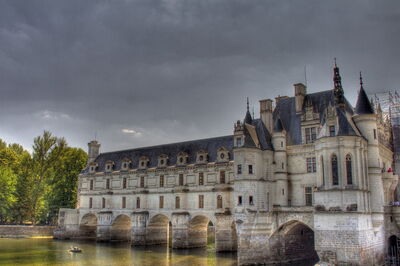
The estate and castle passed through several more hands in the following centuries with some notable women, in particular, coming into possession of it at various points including Louise Dupin, the wife of a wealthy squire who purchased the estate in 1733. Famously, "an intelligent, beautiful, and highly cultivated woman who had the theater in her blood," Louise boasted a literary salon at Chenonceau that attracted leaders of the Enlightenment movement such as the writers Voltaire, Montesquieu, and Fontenelle, the naturalist Buffon, the playwright Marivaux, and the philosopher Condillac. Furthermore, Rousseau was famously her secretary and tutored her son. Louise Dupin also saved the château from being destroyed in the French Revolution by noting to authorities that "it was essential to travel and commerce, being the only bridge across the river for many miles." Another key female figure in the protection of the château was Marguerite Pelouze, a rich heiress who acquired it in 1864 and commissioned the architect Félix Roguet to restore it in 1875. However, such was her passion for the castle and the project that Marguerite found herself in debt and was forced to sell it to Cuban millionaire José-Emilio Terry in 1891. As of 1913, the château has been in the possession of the famous family of chocolatiers, the Menier family. Bombed in WWII, the Menier family had both the castle and grounds wonderfully restored under Bernard Voisin in 1951.
Open to the public for visits today, the Château de Chenonceau is the second-most visited castle in France after Versailles and for good reason. Truly stunning, with a rich history and a habit of making people fall desperately in love with the place, this is one of the must-see châteaux for those who have found a vacation rental in Pays De La Loire or a vacation rental in France and are exploring the incredible castles of the Loire Valley.
Open to the public for visits today, the Château de Chenonceau is the second-most visited castle in France after Versailles and for good reason. Truly stunning, with a rich history and a habit of making people fall desperately in love with the place, this is one of the must-see châteaux for those who have found a vacation rental in Pays De La Loire or a vacation rental in France and are exploring the incredible castles of the Loire Valley.


