If you have found a vacation rental in Paris and end up making your way to the beautiful Musée Rodin, you will likely be visiting with the intention to view the extraordinary works of that artist to whom the museum is dedicated and for whom it is named. However, many do not realise, until they get to the museum, that there are lots of other fascinating works of art and exceptional artists who are represented by the collection. In fact, you may be surprised to stumble across other rather famous names in addition to Rodin, such as Van Gogh.
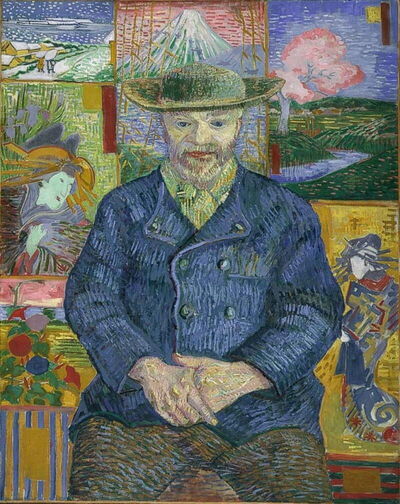
Unlikely a work that many are immediately familiar with but a telling and beautiful example from the artist's oeuvre and readily recognisable as the distinct style of Van Gogh, the work, “Portrait of Père Tanguy” (1887) is today's Art Focus and a piece that we recommend seeking out in the Musée Rodin. Executed in attractive and bright pastel tones, the portrait of this gentleman is set against a backdrop of the Japanese prints that he sold, which were also hugely influential on Van Gogh's work and a great passion of the artist's. This piece, therefore, can be seen as a visualisation of this great inspiration and fascination of his as well as a serene and beautiful portrait of, and tribute to, one of the first art dealers to ever sell Van Gogh's work and someone whose friendship Van Gogh greatly valued. In fact, it is just one of three portraits that the artists painted of him and one of two portraits of Tanguy by Van Gogh that are on display in the Musée Rodin.
Unlikely a work that many are immediately familiar with but a telling and beautiful example from the artist's oeuvre and readily recognisable as the distinct style of Van Gogh, the work, “Portrait of Père Tanguy” (1887) is today's Art Focus and a piece that we recommend seeking out in the Musée Rodin. Executed in attractive and bright pastel tones, the portrait of this gentleman is set against a backdrop of the Japanese prints that he sold, which were also hugely influential on Van Gogh's work and a great passion of the artist's. This piece, therefore, can be seen as a visualisation of this great inspiration and fascination of his as well as a serene and beautiful portrait of, and tribute to, one of the first art dealers to ever sell Van Gogh's work and someone whose friendship Van Gogh greatly valued. In fact, it is just one of three portraits that the artists painted of him and one of two portraits of Tanguy by Van Gogh that are on display in the Musée Rodin.
“Père” Tanguy was so-called because he was a paternal figure in the art world, a paint grinder, art supply dealer, and art dealer who was famous for excepting works as payment and who, as a result, accumulated an extraordinary collection of works by the Impressionists and other great artists working in Paris in the 19th century. Jovial, kind, prone to giving artists food and money, and an ardent and enthusiastic supporter of the arts, it is understandable that a figure like Van Gogh, who was so in need of those very things, would portray Tanguy so warmly. In fact, it has often been noted that he greatly resembles the figure of the resting and benevolent Buddha in this image. Upon Tanguy's death in 1894, his daughter inherited his collection and, ultimately sold the Van Gogh portrait to Rodin, who regarded the Dutch artist as “an admirable demolisher of academic formulae, [who] also had a genius for light”. Eventually, the painting made its way from his own private collection to the permanent collection at the Musée Rodin where it remains on display today.
Significant as the sitter of this portrait may be, the importance of the backdrop against which he is depicted and the importance of Japanese prints to Van Gogh's life and work should also not be understated. Cheap Japanese prints had flooded Europe in the 19th century and had birthed an intense interest in Japan and Japanese art. The colours, methods, compositions, and more used in these pieces were revolutionary to European artists and greatly influenced their work. Van Gogh was particularly enamoured with the work and completely fell under the spell of his imagined vision of Japan and the life of the artist in Japan. Disillusioned with his own life, the lack of recognition of his work, and the competitiveness of his peers, Van Gogh came to imagine a Utopian art scene in Japan in which artists collaborated freely and showed their respect to one another by trading and sharing their prints.
In a letter to Emile Bernard written in September or October of 1888, Van Gogh extolled his idealised virtues of Japanese artists and stated that, “I've long found it fascinating that Japanese artists so often exchanged pictures with one another. This proves that they valued one another, supported one another, and that a certain harmony existed among them. They lead a kind of brotherly life, naturally, and didn't scheme against one another. The more we are like them in this regard, the better it will be for us.” In the Spring of the previous year, Van Gogh had organised an exhibition of Japanese prints in Paris at the Café du Tambourin and, though it did not attract a great deal of attention, it marked the beginning of Van Gogh's intensive study of Japanese art and the incorporation of its characteristics in his own work. In particular, it is apparent that the two-dimensional colouring and distinct lines of Japanese prints became hugely influential on his art. A large part of Van Gogh's process in digesting the Japanese prints that he so loved was to reproduce some of the best and most famous masterpieces. As such, the prints in the background of, “Portrait of Père Tanguy,” include some of Van Gogh's favourite examples including a print of Mount Fuji, a snowy scene with two figures, prints of Kabuki actors, and an image of a cherry blossom tree in bloom next to a river.
So, if you have found a vacation rental in Paris and you are interested in art and the work of Van Gogh, in particular, a visit to the Musée Rodin and making a point of it to seek out this exceptional painting is a must. Visualising much about the life and work of Van Gogh, this beautiful portrait is incredibly significant and fascinating and one of the lesser-recognised but most wonderful examples of the artist's work in France.
Significant as the sitter of this portrait may be, the importance of the backdrop against which he is depicted and the importance of Japanese prints to Van Gogh's life and work should also not be understated. Cheap Japanese prints had flooded Europe in the 19th century and had birthed an intense interest in Japan and Japanese art. The colours, methods, compositions, and more used in these pieces were revolutionary to European artists and greatly influenced their work. Van Gogh was particularly enamoured with the work and completely fell under the spell of his imagined vision of Japan and the life of the artist in Japan. Disillusioned with his own life, the lack of recognition of his work, and the competitiveness of his peers, Van Gogh came to imagine a Utopian art scene in Japan in which artists collaborated freely and showed their respect to one another by trading and sharing their prints.
In a letter to Emile Bernard written in September or October of 1888, Van Gogh extolled his idealised virtues of Japanese artists and stated that, “I've long found it fascinating that Japanese artists so often exchanged pictures with one another. This proves that they valued one another, supported one another, and that a certain harmony existed among them. They lead a kind of brotherly life, naturally, and didn't scheme against one another. The more we are like them in this regard, the better it will be for us.” In the Spring of the previous year, Van Gogh had organised an exhibition of Japanese prints in Paris at the Café du Tambourin and, though it did not attract a great deal of attention, it marked the beginning of Van Gogh's intensive study of Japanese art and the incorporation of its characteristics in his own work. In particular, it is apparent that the two-dimensional colouring and distinct lines of Japanese prints became hugely influential on his art. A large part of Van Gogh's process in digesting the Japanese prints that he so loved was to reproduce some of the best and most famous masterpieces. As such, the prints in the background of, “Portrait of Père Tanguy,” include some of Van Gogh's favourite examples including a print of Mount Fuji, a snowy scene with two figures, prints of Kabuki actors, and an image of a cherry blossom tree in bloom next to a river.
So, if you have found a vacation rental in Paris and you are interested in art and the work of Van Gogh, in particular, a visit to the Musée Rodin and making a point of it to seek out this exceptional painting is a must. Visualising much about the life and work of Van Gogh, this beautiful portrait is incredibly significant and fascinating and one of the lesser-recognised but most wonderful examples of the artist's work in France.


