Moreška dancers
Posted in: Curiosities Events History Must See Attractions
The Moreška is a traditional sword dance that is hundreds of years old and was once performed all over the Mediterranean but is now only demonstrated in the town of Korčula, on the Croatian island of the same name in the Adriatic. Common throughout the Mediterranean in 12th and 13th centuries, the dance is thought to have been imported to this charming island in 16th century from Italy and Dubrovnik. After the 19th century, Korčula was the only place where it remained. Said to have originated in Spain where the dance was linked with the conflict between the Moors and Christians, in Dalmatia, this was applied to their struggles against the Ottoman Empire.
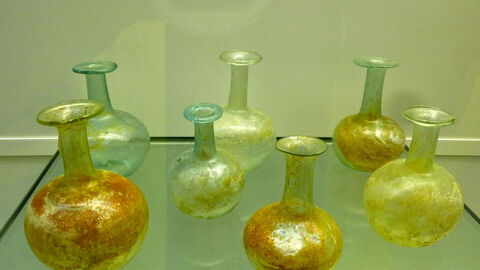
Glass bottles, Museum of Ancient Glass
Posted in: Castles & Palaces Curiosities Museums & Galleries Must See Attractions Pretty Views Tourist Attractions
Zadar, a stunning city and seaside resort town on the Dalmatian Coast of Croatia, is a beautiful gem that is full of unique attractions, history, culture and things to see and do. One of the most interesting attractions - and a perfect place to nip into for some peace and to take a break from the sun – has to be the Museum of Ancient Glass. Just find a holiday rental in Zadar and plan a sunny getaway filled with intrigue, surprises and special attractions around every corner.
Posted in: Beaches Curiosities Must See Attractions Pretty Views Tourist Attractions
Firule Beach is one of the oldest and most popular spots in all of Split. Locals love it and it is not merely a beach but a meeting point and part of the lifestyle and cultural landscape of the city. Tourists are now getting wise to it too and, as it is one of the best beaches in Croatia, it is a must-see for anyone who is looking to book a vacation rental in Split.

Located in a district of the city bearing the same name, Firule Beach is a small sandy beach that is popular among young mothers and that is great for families with kids as it boasts fine sand, shallow water and natural shelter. Said shelter, particularly from the North wind, also makes it a great spot for swimming and you'll even find people out in the water during the winter months. It is, however, a simple beach with not many amenities or services, just a shower and a coffee bar.
Ludbreg's Centre of the World
Posted in: Curiosities Must See Attractions Tourist Attractions
We are, each of us, the center of our own worlds but if you are from the Croatian town of Ludbreg, you will find yourself truly at the center of the globe...or so they claim.

Of course, this isn't actually accurate and the locals don't really believe it but it is something for which the town has been famous for a long time. The whole idea is an ancient one and goes back centuries but was “proven” in the 19th-century by a Swiss art historian and restorer named Dr. Erasmus Weddigen, who was a frequent visitor to, and fan of, the town. Ludbreg is steeped in legends and myths and he was fascinated by this one, in particular.
Overview
Posted in: Architectural Gems Curiosities Must See Attractions Tourist Attractions
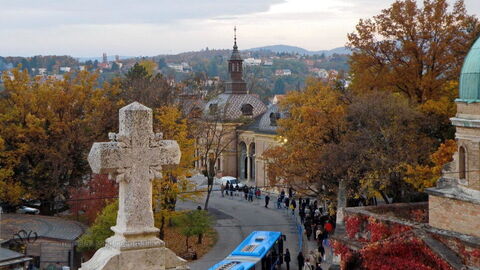
More and more often, I find myself writing about cemeteries as tourist attractions and, at first, I was a little disturbed by this. However, upon consideration, I've come to reexamine these spaces. There is, of course, something morbid about visiting them but it is also understandable. As the final resting place of endless loved ones, many cemeteries are lovely and peaceful places filled with architectural wonders, incredible sculptures and beautifully planted gardens. Mirogoj Cemetery in Zagreb is a good example of this. It really is a rather stunning architectural gem so if you have found a vacation rental in Zagreb, be sure to to drop by and wander this peaceful and beautiful space.

Mirogoj is the main cemetery of the city and is located just outside the city centre. It is one of the most beautiful cemeteries in Europe and was established in the 19th century. Built on the grounds of what was originally the summer house and gardens of Illyrian leader Ljudevit Gaj, the cemetery was built after he died in 1872 and opened in 1876.