Archive for 'Food and Wine in Spain'


Another Friday, another week that you managed to make it through! We think that warrants another delicious boozy coffee cocktail to get the weekend started right. Move over Dalgona coffee, another excellent coffee option is in town, with just the kick you may need and definitely deserve at the moment.

Very like the Barraquito from the Canary Islands that we spoke about recently, the Asiático is an alcoholic coffee-based drink that is typical from the Spanish city of Cartagena in Murcia and is representative of the cuisine of the Campo de Cartagena. Made from coffee with condensed milk and cognac, you can also add a few drops of Licor 43, a couple of coffee beans, lemon rind, and cinnamon but these are more optional elements.     Read More
  

Barraquito
Given that so many of us have found ourselves with a little more time on our hands at the moment and nowhere to go, many are picking up new hobbies, going back to baking, turning to exercise, and other activities that are all about taking care of ourselves, being kind to ourselves, and treating ourselves better. One activity that has garnered a lot more attention than it already normally does, and is being turned into an art form in even your average home, is coffee-making. Normal coffee drinkers are embracing the ritual of drip coffee, trying new blends they might never have considered before, and attempting more exotic and moreish coffee recipes at home that would usually only be reserved for holidays.

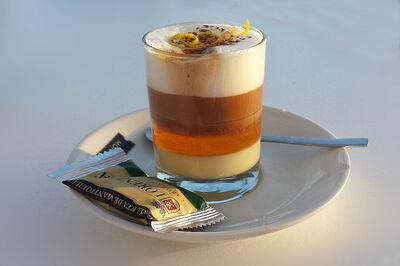
One such coffee recipe comes from Spain, and more specifically the Canary Islands, the barraquito, which is a coffee cocktail unique to the area....so, not strictly a coffee, more like an Irish Coffee but it can be made either without the alcohol, for a sweet afternoon pick-me-up, or with alcohol, as a dessert after a particularly good meal. Delicious and utterly decadent, it is a must for those who like their coffee sweet and filling!     Read More


We have previously written about travel tips for those undertaking the famous Camino de Santiago, or Way of St. James, one of the most well-known hiking routes in the world, and an immense network of paths that connect to the shrine of the apostle Saint James the Great in the cathedral of Santiago de Compostela in Galicia, northwestern Spain, and which has been a popular pilgrimage and hiking route since all the way back in the Middle Ages. However, in this piece, we are focussing on one point along the route and something that might be a welcome surprise to those undertaking the hike: a wine fountain! So, if you have the Camino on your bucket list and have always wanted to do it for yourself, then just find a vacation rental in Galicia and finally do it! Whether you’re only doing a section of the walk or want to do various trips to highlights along the way, such as that aforementioned wine fountain, then don’t delay and get booking today!     Read More


Cheeses
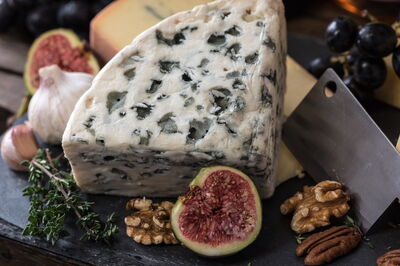
Spain loves a food product museum and there are various kinds that you will encounter located all around the country. However, one of the best of all of these museums is so appealing because the central star is well and truly the focus. We are, of course, talking about the MQM Museo del Queso Manchego in Toledo, which is less about the museum and far more about cheese. If you have found a vacation rental in Castille-la-Mancha and are spending time exploring Toledo and, in particular, exploring the culinary scene of the city, then you should definitely set aside some time to stop by.

Located in the heart of the historic quarter of Toledo, right next to the Cathedral, the Museo del Queso Manchego (or Museum of Manchego Cheese) was opened in the last few years and is dedicated to this traditional and ancient local cheese that is the city’s most well-known export. It is divided into three areas; a museum, a catas (or tasting) room, and a shop. The museum has an exhibition with audiovisual presentations, objects involved in cheesemaking throughout the centuries, and other Manchego cheese-related items, accompanied by information panels. This information is in Spanish so, if you don’t speak the language, you might not be able to glean as much from the exhibition. However, the items are still interesting to look at as part of the whole experience.     Read More


The Pink Panther had a few too many...
One of the most important things to do upon landing in an area is to explore the culinary landscape as much as the geographic landscape. Outlining both famous and unique and unheard of local dishes and specialities to try out is key to any vacation. If you have found a
vacation rental in Barcelona, for example, you will find no shortage of delicious things to eat and drink. However, if you are planning on spending time in the Gothic Quarter of the city, then you should head to the Carrer de la Mercè, a street that runs through this lovely, historic, and scenic part of the city, and find yourself a Panther’s Milk.

Panther’s Milk, or Leche de Pantera in Spanish, is a popular cocktail made of condensed milk, gin, and water or ice, and was said to have been invented by the elite military unit, the

Spanish Foreign Legion, in the 1920s. There are several origin tales, one that says that the unit’s head and founder, General José Millán-Astray asked a local bartender to create a simple and cheap cocktail recipe that his men could make readily no matter where they were stationed, and another that claims injured soldiers birthed the drink by mixing medical-grade alcohol with condensed milk while confined to infirmaries, swapping the medical-grade alcohol out for gin or whatever alcohol they had on hand upon being released.     Read More