
The county of Split-Dalmatia is an ideal spot to find a vacation rental in Croatia as it is one of the most beautiful parts of the country with an incredible coastline and a wide variety of tourist attractions. When one looks into these tourist attractions of the region, they will quickly discover that the most popular usually fall into one of a few categories: famously lovely beaches, incredible churches or historic fortresses, natural gems, museums, and scenic spots boasting panoramic views. One especially interesting spot, that is a must-see for those who have found a villa in Split-Dalmatia and are planning a day trip to the charming port town of Hvar, is the town's fortress. This fascinating gem is not only a picturesque architectural wonder but it also combines several other of the types of attractions of the region under one roof as it is also a museum, boasts a rich and intriguing history, and affords one of the best views in the entire country.
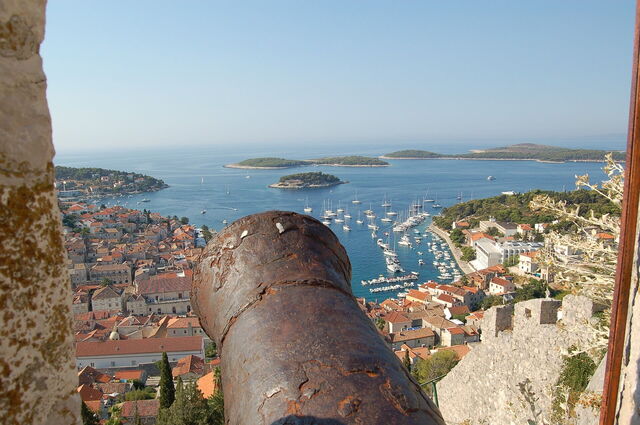
Perched high atop the town, the Fortress or Fortica (also known by the locals as the Španjola) takes in views down over the cluster of incredible historic buildings of the old town of Hvar, the bay, its surroundings, the sea, and all the way out to the Pakleni islands. This view is often made even more impossibly lovely by the incredibly vibrant hues of this landscape on a sunny day with the bright cerulean of the skies reflected in rich blue waters, the Mediterranean greenery that is so lush in this area, and the creamy white stone of the buildings below gleaming in the light with the rich terracotta of the tiled roofs atop them all, all painting a vivid scene. It is equally an ideal place to go during the day for the clearest views to see far out of the water or to go at sunset and watch the rich glow that makes the city even more magical and pretty. At night, the building is lit up beautifully to crown the city perfectly and can be seen from all around.
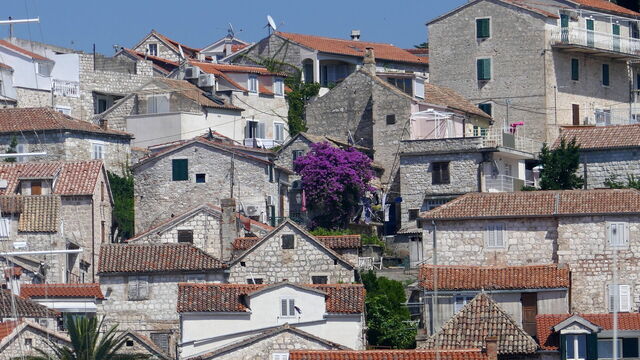
Well-restored, this impressive fortress is not only a charming building but it also perfectly conjures the past and its time as an important defensive structure (along with the city walls) in a city that was once a lynchpin of the mighty Venetian Empire. Completed in 1551 by the Venetians, the foundations were actually laid far, far earlier as it is known to have been a site of continuous fortification function since prehistory. Its earliest foundations that can be found today can likely be traced back to a defensive structure that was built in order to protect an Illyrian settlement in the first millennium BC. After this, the site was variously home to Byzantine citadel in around the 6th century before the beginnings of the current building first came into being in 1282. The building of this newest and lasting fortress was prompted by the town going to the Venetians for protection from the dreaded hoards of pirates that were plaguing the Adriatic. Despite this, it was actually the town itself that financed the project by raising funds through the sale of salts. One might wonder, then, where the Spanjola nickname comes into play if it was the Italians involved in the creation of the fortress but this lingering reminder actually comes from the Spanish engineers who were called to work on the building for a phase during the 14th century. Why they are the ones to get most of the credit today may seem odd to us but is one of those intriguing twists of history and how collective memory works – perhaps the locals are simply still salty that they had to foot the bill!
In 1571, once the fortress had finally been completed after over two centuries of planning and building, it came to prove its usefulness when Turkish forces attacked the town and the entire population of Hvar was able to take shelter inside the secure and reassuring building while they plundered and set everything else alight outside. Unfortunately, some eight years later and in a bizarre twist of fate, a bolt of lightening that struck the building during a storm managed to ignite a store of gunpowder in the fort and cause an explosion that resulted in substantial damage to both the building and its substructure. Repairs were done after this incident and its appearance was then changed quite substantially in the 19th century when the then ruling Austrian forces remodelled and added larger barracks and raised battlements. Hvar’s strategic importance eventually waned in that same century and, by the end of the 1800s, the Fortica had been left to fall into a state of disrepair. The building was used for various purposes – including, strangely enough, as the site of a rather popular disco – following this until it was ultimately turned into a historic monument and tourist attraction and restored beautifully for this purpose.
Today, the Fortica is open to the public for visits and makes for a charming day out if you have found a vacation rental in Split-Dalmatia and are exploring the city while on holiday in Croatia. The walk from the town up to the fortress is a pretty one (though it is steep and may not be the most accessible for those with mobility issues or those who need to be careful about over-exerting themselves) and takes about 20 minutes. The most direct way to access the building from town is to the stairs next to Cafe Loco and up to a road where you will find another flight of stairs. It is clearly signposted and easy to see so you should be able to find your way without problem. The Fortica can also be reached by car as well, however, if you don’t fancy the trek!
Most visitors head right to the roof to admire the views and the building’s architectural features and the canons overlooking the landscape but it is also worth heading down to the former prison where there is a collection of ancient amphorae that have been recovered from the seabeds in the surrounding area and the terrace cafe where you can enjoy a coffee or a cold drink or an ice-cream while still taking in those views. Boasting lots of reasons to visit and one of the best views in all of Croatia, be sure to plan a visit to this gem in Hvar if you have browsed our holiday rentals in Split-Dalmatia and are putting together an itinerary of the region!
Picture 1 Falk2 / CC BY-SA 4.0