Istria is one of the most incredible places to holiday boasting perfect coastal resorts with admittedly rocky shorelines but impossibly clear and rich blue waters that attract floods of European tourists in summer; an acclaimed gastronomy featuring dazzling seafood dishes, award-winning wines, and high-quality ingredients and products; a rich and diverse historical and cultural heritage; and a stunning and lush hilly inland landscape that unfolds like a pretty picture.
If you find a vacation rental in Istria, you will quickly discover that it has all sorts of surprises waiting for you, such as architectural gems, immense natural beauty, fairytale castles, pretty towns trapped in time, incredible temples and ruins, beautiful churches and monasteries, stunning works of art, light shows, a wonderful aquarium, and much more besides. However, one of the more unique and intriguing among all of these tourist attractions is Dinopark Funtana, a dinosaur-themed amusement park that any kids in your party will be thrilled to visit!
Opened back in 2009 and located right in the heart of the region, a few minutes from Poreč, Dinopark Funtana is the first and largest theme park in Croatia and lets kids experience a much less deadly version of Jurassic Park for themselves. Come for the educational experiences but stay for the fun and adventure that awaits at this rather special theme park in Croatia!
Posted in: Christmas
Curiosities
Events
Markets
Pretty Views
Tourist Attractions
Water & Amusement Parks
If you have found a vacation rental in Croatia and are spending time in the country over the winter season, particularly spending time in the north of the country, then you might be looking for something festive to do. Luckily, Croatia is actually home to one of the best Christmas attractions in Europe, Salajland, which is reason enough to pick Croatia as your winter getaway destination in the first place. This true winter wonderland is utterly magical and an absolute must-see at least once in your lifetime.
Salajland is named for the Salaj family and is located at their family home in Grabovnica near the central Croatian town of Čazma. It is a famous place for Christmas lights and is a Christmas theme park. Made up of over four million Christmas lights, this fairyland come to life is perfect for getting you in the festive spirit.
Salajland is named for the Salaj family and is located at their family home in Grabovnica near the central Croatian town of Čazma. It is a famous place for Christmas lights and is a Christmas theme park. Made up of over four million Christmas lights, this fairyland come to life is perfect for getting you in the festive spirit.

11
Oct
2019
2019
Considering the time of year, with both Hallowe’en and mid-term break coming up very soon, we have been looking at some of the spookiest attractions in our favourite holiday destinations that make for perfect getaway locations, across all of our websites. If you’re talking about Croatia, for example, there are quite a few haunted spots and creepy locations to visit but if you have found a vacation rental in Zagreb then the one spooky attraction that you need to pencil in is a visit to the Old Jurjevsko Cemetery.
A forgotten cemetery that has largely fallen into disuse and little-known gem, which those seeking it out are often told to avoid as it is said to be haunted, the cemetery is first mentioned in writing all the way back in 1377, when it was noted as a “cemetery for the poor” or (more politely) the “Chestnut Cemetery”. It came into being when spaces in the existing cemeteries in town ran short and was established as an alternative burial space for free citizens with less money. By the 18th century, it, too, became crowded and was expanded in 1729. The chapel attached to the burial ground was also made more luxurious and the stigma of it being for the poor disappeared. Further expansion happened in 1825 but, abruptly, in 1876, it was closed and Mirogoj Cemetery became the city’s main burial ground.
A forgotten cemetery that has largely fallen into disuse and little-known gem, which those seeking it out are often told to avoid as it is said to be haunted, the cemetery is first mentioned in writing all the way back in 1377, when it was noted as a “cemetery for the poor” or (more politely) the “Chestnut Cemetery”. It came into being when spaces in the existing cemeteries in town ran short and was established as an alternative burial space for free citizens with less money. By the 18th century, it, too, became crowded and was expanded in 1729. The chapel attached to the burial ground was also made more luxurious and the stigma of it being for the poor disappeared. Further expansion happened in 1825 but, abruptly, in 1876, it was closed and Mirogoj Cemetery became the city’s main burial ground.
13
Aug
2019
2019
Brač is a famously beautiful Croatian island in the Adriatic, that is part of the Split-Dalmatia region and the biggest island in Dalmatia. It is best-known for Zlatni Rat (the Golden Cape), a stunning white-pebble beach outside the resort town of Bol that is a popular windsurfing spot, and for the striking horseshoe-shaped beach that is located by the island's main town, Supetar. With its distinct and varied coast with numerous gullies, crevices, cavities, round valleys, coves, and famously lovely beaches and its lush inland landscape, it is a place of great and singular natural beauty.
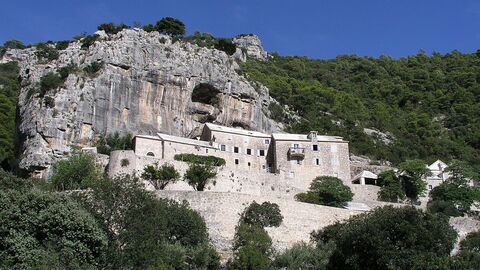
However, that is not all there is to the island. As a major site for quarrying stone since antiquity, it makes sense that the island is also home to some incredible works of manmade beauty too. Pretty traditional villages are to be found on the island, with the seaside village of Pučišća being especially noteworthy. However, the most famous architectural gem on Brač is likely the beautiful hermitage of Pustinja Blaca. One of several hermitages on the island, Pustinja Blaca is made from the glittering white limestone for which Brač is well-known and is set into a romantically craggy cliffside. A rather extraordinary sight to behold, it is a must-see for those who have found a vacation rental in Split and plan on taking the ferry over to explore Brač for the day.
However, that is not all there is to the island. As a major site for quarrying stone since antiquity, it makes sense that the island is also home to some incredible works of manmade beauty too. Pretty traditional villages are to be found on the island, with the seaside village of Pučišća being especially noteworthy. However, the most famous architectural gem on Brač is likely the beautiful hermitage of Pustinja Blaca. One of several hermitages on the island, Pustinja Blaca is made from the glittering white limestone for which Brač is well-known and is set into a romantically craggy cliffside. A rather extraordinary sight to behold, it is a must-see for those who have found a vacation rental in Split and plan on taking the ferry over to explore Brač for the day.

30
Jul
2019
2019
The island of Vis is in the Split-Dalmatia region and is the farthest inhabited island in Croatia. It is a beautiful place with a mild Mediterranean climate that is ideal for growing delicious food and for establishing successful vineyards and a location right out in the open sea that has allowed a strong fishing culture to be born and maintained on the island. These two traits have also meant that Vis has been a popular tourist destination for a long time as well. With its gorgeous old buildings, pretty landscape, excellent restaurants, natural phenomena like the Blue Grotto, and amazing beaches, Vis has a lot to offer and is an ideal day-trip destination for those who have found a vacation rental in Split and are looking for something special to do during their stay in the area.
While Vis has plenty of charms and a good deal to see and do, her beaches are one of the most enduringly popular and appealing traits that keep people coming to experience it for themselves. There are plenty to choose from and they all benefit from the unspoiled nature of the landscape of Vis, the crystal-clear waters, and the tranquillity offered by the presence of considerably smaller tourist crowds compared to other parts of the Dalmatian Coast.
While Vis has plenty of charms and a good deal to see and do, her beaches are one of the most enduringly popular and appealing traits that keep people coming to experience it for themselves. There are plenty to choose from and they all benefit from the unspoiled nature of the landscape of Vis, the crystal-clear waters, and the tranquillity offered by the presence of considerably smaller tourist crowds compared to other parts of the Dalmatian Coast.